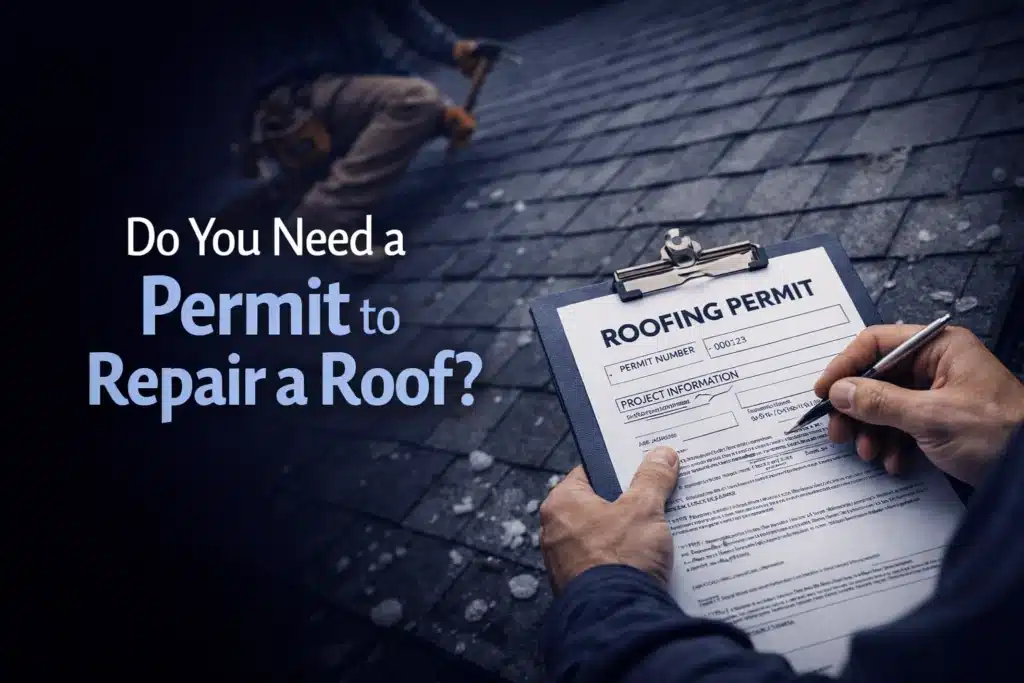
A roof leak can make homeowners want a fast fix the same day. But before any contractor starts tearing off shingles or opening up damaged sections, one question matters: do you need a permit to repair a roof?
In many cases, yes. In Florida, building permits are generally required for construction, alteration, and many repair projects, and both the City of Orlando and Orange County have roof-permit processes for reroofing work. Small, truly minor repairs may be treated differently, but roofing work is not something to guess on.
Do You Need a Permit to Repair a Roof? Quick Answer
Do you need a permit to repair a roof? Usually, yes for substantial roof repair or reroof work, and sometimes no for very minor repair work, depending on local rules and how much of the roof system is being affected. In Orlando, the city has a specific residential reroof permit process, and Orange County also has a dedicated roof permit process.
As we often explain to homeowners, the safe rule is simple: if the work goes beyond a tiny patch or involves replacement of roofing materials, damaged sections, underlayment, or structural components, check the local building department before work starts. Florida code materials also note that “ordinary minor repairs” can be treated differently, but roof-covering replacement or repair work is not something to assume is exempt.
Why Roof Repair Permits Matter
Roof permits are not just paperwork. They help confirm that the repair meets code, that approved materials and fastening methods are used, and that required inspections happen after the work. That matters even more in Florida, where roofs face heavy rain, heat, wind, and storm exposure.
Permits also protect homeowners when questions come up later about insurance, home sales, warranty disputes, or whether the work was done correctly. If a contractor tries to skip the permit on a repair that should have one, that is a red flag.
Florida generally requires permits for repair work
Florida law says local enforcing agencies issue permits for construction, alteration, modification, repair, or demolition work, and the City of Orlando says state law requires permits for most projects, even small ones.
That does not mean every tiny sealant touch-up automatically becomes a major permit event. But it does mean roof work should never be treated casually.
Roofing work usually triggers inspections too
Florida code materials state that roofing work requiring a permit is subject to inspection by the building official. So if the repair needs a permit, inspections often come with it.
That inspection step matters because hidden issues such as bad decking, poor underlayment, or fastening errors can shorten roof life.
When You Usually Need a Permit for Roof Repair
Most homeowners should assume a permit is likely needed when the repair is more than minor spot work.
Repairs that replace roofing materials over a meaningful area
If the project involves removing and replacing sections of shingles, tile, metal panels, or flat-roof materials, permit review is commonly required. Orlando has a residential reroof permit application, and Orange County has roof permit submission requirements.
This applies even more when the work includes underlayment, flashing, deck exposure, or system upgrades.
Repairs tied to storm damage
If hail, wind, or falling debris damaged part of the roof, the repair may go beyond a simple patch. Once the work starts touching multiple components, permit requirements become more likely. That is one reason storm-related jobs often begin with a roof inspection.
After Florida storms, homeowners also need clear documentation for insurance and repair scope. Related guidance like what to do after hail, wind, or rain damage can help you think through the next steps.
Repairs that expose or replace decking
If roof decking is soft, rotted, or water-damaged, the job is no longer a surface-only repair. Once the work reaches the structural layer beneath the roof covering, permit review becomes far more important. Florida code resources also discuss roof section thresholds and code treatment of larger roofing work.
When a Roof Repair May Not Need a Permit
This is the part homeowners often hear about from contractors: “It’s just a small repair.” Sometimes that may be true, but the term minor repair is narrower than many people think.
Florida code materials note that ordinary minor repairs may be allowed without a permit with the approval of the building official, but those materials also specifically say such repairs do not include roof-covering replacement or repair work in the way many people assume.
So a tiny sealant touch-up around a flashing detail may be treated differently from replacing damaged shingles, tiles, membrane sections, or metal panels. That is why the safest answer is not “permits are never needed for repairs.” The safer answer is “check the local jurisdiction before the work starts.”
Orlando and Orange County Homeowners: What to Expect
If the property is in the City of Orlando, there is a published process to apply for a residential roof permit, including project details, roof information, underlay details, and fastener types. The city also lists reroof permit forms in its permitting documents.
If the property is in unincorporated Orange County, the county has a dedicated roof permit page with submission requirements and owner-builder instructions for homeowners doing their own work.
Local rules can still vary by jurisdiction
This is important. Even within the greater Orlando area, permit handling may differ depending on whether the property falls under City of Orlando or Orange County jurisdiction. That is why a roofing contractor should confirm the local process before the job starts.
Homeowners doing their own work still face permit rules
Both Orlando-area permitting resources and Florida owner-builder rules make clear that homeowners can sometimes act as owner-builders, but that does not remove the permit requirement itself.
Questions to Ask Before Roof Repair Starts
Use this checklist before approving the job:
- Does this repair require a local permit?
- Who is pulling the permit, the contractor or the owner?
- Will the work require an inspection afterward?
- Does the repair include underlayment, flashing, or decking?
- Is this truly a minor repair, or is it closer to partial reroofing?
- Will the repair affect insurance documentation or warranty coverage?
Those questions are especially important if you are already trying to decide between roof repair and broader replacement work.
Why Some Contractors Try to Avoid Permits
Not every contractor who talks about “keeping it simple” is trying to help you. Sometimes skipping a permit is just a shortcut to save time, avoid inspections, or make a quote look cheaper.
That can create bigger problems later:
- unapproved work during a home sale
- insurance questions after a future storm
- disputes over whether the repair met code
- hidden workmanship issues that were never inspected
If you are comparing bids, content like how to hire a roofing contractor in Florida and how to choose the best roofing contractor can help you screen contractors more carefully.
Repair Permit vs Replacement Permit
A lot of homeowners ask where the line is between repair and replacement. In practice, that depends on the scope.
A small repair usually addresses a limited damaged area. A larger project may look like “repair” in conversation but function like partial reroofing or full replacement once materials come off and hidden issues appear. That is why the distinction matters so much in permitting.
If your roof has repeated leaks, widespread damage, or old materials across multiple sections, it may be smarter to compare repair with roof replacement rather than assume another patch is enough.
FAQ
Do you need a permit to repair a roof in Florida?
Often yes, especially when the work goes beyond a very minor repair. Florida law and local jurisdictions generally require permits for repair and alteration work, and Orlando-area jurisdictions have roof permit processes.
Do small roof repairs need a permit?
Sometimes no, but only if the work is truly minor and treated that way by the local building official. Do not assume that any roof repair automatically qualifies as exempt.
Does reroofing require a permit in Orlando?
Yes. The City of Orlando publishes a residential reroof permit application process and related permitting forms.
Does Orange County require a roof permit?
Yes. Orange County has a dedicated roof permit page with submission requirements and instructions.
Who pulls the roof repair permit?
Usually the contractor, though homeowners acting as owner-builders may apply themselves if they qualify under the rules.
What happens if roof work is done without a permit?
That can lead to failed inspections later, code issues, insurance complications, and extra hassle when selling the property. The exact consequences depend on the local jurisdiction and scope of work.
Does insurance require a permit for roof repair?
Insurance policies vary, but permit and inspection records can help support that the work was done properly. For storm claims, proper documentation is usually helpful.
How can I tell if my repair is actually too big to treat as minor?
If the job includes replacing roofing materials over a section, touching underlayment, flashing, or decking, or dealing with storm damage across more than a tiny isolated spot, ask the local building department or your roofer before work begins.
Get Clear Answers Before Roof Repair Starts
If you are not sure whether your roof issue calls for a permit, a simple patch, or a larger repair plan, Rhino Roofing Orlando can help you sort it out. We can inspect the roof, explain the likely scope, and help you take the right next step. Contact Rhino Roofing Orlando or schedule a roof inspection before the work begins.
Conclusion
Do you need a permit to repair a roof? In many cases, yes, especially when the work goes beyond a very minor fix. Florida generally requires permits for repair work, and both the City of Orlando and Orange County have published roof-permit processes.
The practical takeaway is simple: do not rely on guesswork or a contractor’s casual promise that “no permit is needed.” If the repair involves roofing materials, damaged sections, underlayment, decking, or storm-related work, verify the requirement before the job starts.