A Guide for Orlando, Florida Homeowners
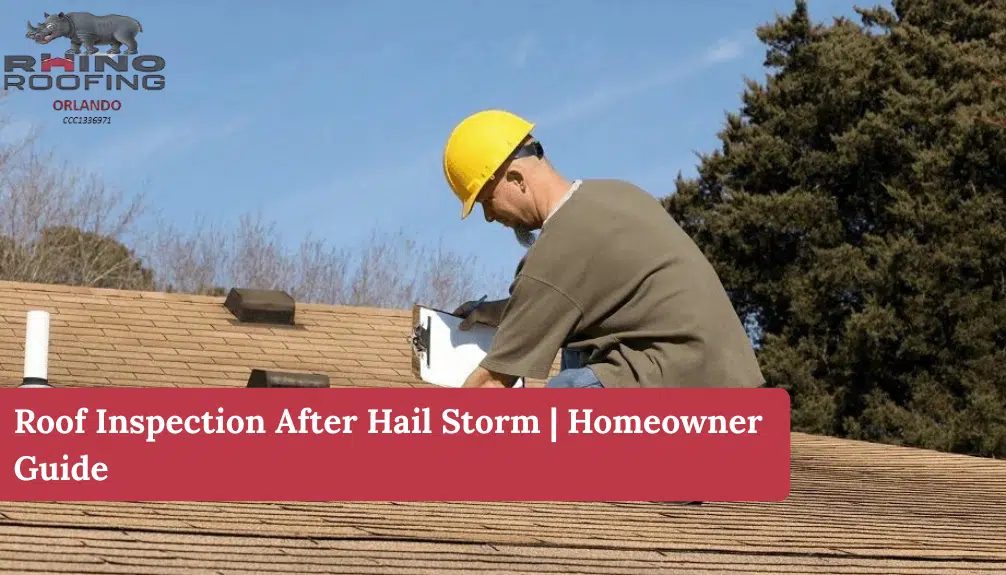
When the storm is over, it would be a good idea to inspect your roof within the next 24 to 48 hours in order to identify the damage early. Firstly, you could simply scan the area from the ground to find out if any of the gutters have been dented, shingles fallen off or if there are granules in your downspouts. In case it is safe and you have binoculars, you can also look for any dents, cracks, or missing shingles on your roof from the roof surface.
Here’s a checklist every homeowner should consider after a hail storm:
- Take pictures of the storm date and any visible damage that can be seen
- Try to find dents or cracks in gutters, downspouts, and siding
- Check your gutters for a buildup of granules (a sign that the shingles are damaged)
- Schedule a professional roof damage inspection for hidden issues
- If it is necessary, call your insurance company to file a claim
A proper roof inspection for hail damage can save you thousands in future repairs. The impact of a small hail can weaken your shingles, flashing, and vents thus leading to leaks that may only be discovered months later.
Why Promptly Attending to Hail Damage Is Necessary
Most of the time, a hail storm will leave you wondering how your roof survived if you look at it from far away. Indeed, there may only be a few scratches on the surface but, in fact, it could be that your roof has been severely weakened.
Throughout the different seasons in a year the residents of Orlando, MA, come across various types of extreme weather conditions. Whether it is a summer lightning storm or a winter nor’easter, your roof is getting hit constantly.
Step-by-Step Roof Inspection Process
After a hail storm you may immediately follow the steps below to conduct a roof damage inspection. But you should remember: your safety should be your number one priority, always. Never get on a wet or broken roof for any reason whatsoever.
Ground-Level Inspection
- Take a walk around your property. Look out for any dented gutters, damaged siding, or if there are pieces of branches and leaves in your yard.
- Inspect your gutters and downspouts. Finding granules in shingle granules (the sandpaper-like coating on shingles) means shingle damage to the roof. You can spot this sign only when gutters are kept clean.
- Look at your outdoor AC units, deck railings, and window screens From time to time their patterns of hail impacts may match the roof damage.
- Grab your binoculars and look at your roof. Check out dark spots, absence of shingles, or dents on metal components that are visible.
Check Attic
If you can, go up there and take a look around. Water marks, wet insulation, or even the sun coming through the cracks in the roof are all pointers that something is not right. Most of the time these indications appear way before the leakage inside the house becomes visible.
Indicators of Hail Damage
If you know the signs of hail damage, it will be easier for you to do a thorough roof inspection for hail damage on your own. Below are some of the common signs of damage:
- Dented or bruised shingles: These may be soft to the touch and a dark patch may show.
- Corroded or broken shingles: Hail blower can damage shingles and cause them to
- break apart.
- Granule shedding: Spots that are left without the protective granules expose the
- asphalt layer to harm from the sun’s rays.
- Wear on flashing: Metal flashing around chimneys, vents, and skylights may
- show dents or bends.
- Dented roof vents and pipes: Metal parts are most easily damaged by hail.
Roofing Inspection Checklist
Here is a roofing inspection checklist that can help you stay organized while doing an assessment:
| Inspection Area | What to Check |
| Shingles | Dents, cracks, missing pieces, granule loss |
| Gutters | Dents, granule buildup, clogs, misalignment |
| Flashing | Bends, dents, gaps, loose sections |
| Vents & Pipes | Dents, cracks, damaged seals |
| Skylights | Cracked glass, damaged frames, seal issues |
| Attic Interior | Water stains, damp insulation, daylight visible |
| Siding & Paint | Dents, chips, cracks in exterior surfaces |
Safety Tips for Homeowners
Your safety should come first in all situations, nothing should take precedence over it, not even roof inspections. Please read carefully and follow the guidance that is given here.
- Do not in any case climb up on a roof that is wet or icy or has been damaged in any way. A roof should be dry or if it is not, a professional must be called.
- Do not touch downed power lines. Make a call to your utility company to get them fixed.
- Be careful of tree branches that may have been weakened. Storms can easily cause hanging branches.
- Wear proper shoes. If you have to go to a high place, put on non-slip shoes.
- Take pictures of everything. Insurance claims and roofers evaluation will be made easier.
When to Call a Professional Roofer
Even though it is good to do some basic ground-level monitoring, certain situations are beyond the capability of untrained eyes. It is a good idea to call a professional roofer if:
- You see any visible damage, even if it looks minor
- Your roof is over 15 years old (age makes it more fragile)
- You feel unsafe to climb up on your roof
- Your insurance company requests a professional evaluation
- You need proof for a warranty or insurance claim
Professional roofers have the training to identify damages that are not visible even to the homeowners. Moreover, they will provide the documentation that insurance companies consider. A local roofing company that provides commercial and residential roof repair and maintenance, in Orlando, will be able to serve their customers faster as they are already familiar with the weather conditions of the region.
Storm Damage Roof Inspection Overview
Typically, a professional storm damage roof inspection will cover a few key aspects:
- Thorough outer check: Attention will mainly be laid on shingles, flashing, gutters, vents, and skylights
- The attic part inside inspection: The primary focus would be on damages caused by leaks, moisture, and any structural changes
- Photo documentation: Photos in great detail which will be great for your records and insurance
- Written assessment: A report prepared by the assessor outlining the results and suggestions
- Repair estimate: A detailed breakdown of the costs involved for any work required
Many well-known roofing companies provide free inspections post-storm as part of their service. This is a great way for homeowners to get a clear understanding of the roof’s condition without spending a dime initially.
Pros and Cons of Skylights During Hail Season
Skylights can add charm and natural light to your home. But, hail storms can cause damage to skylights and they will require special care if you’re going to keep them. Here is a brief rundown of the advantages and disadvantages of skylights that we have come up with:
| Pros | Cons |
| Modern skylights use impact-resistant glass | Older skylights are more vulnerable to cracks |
| Easy to spot visible damage | Seal damage may not be obvious at first |
| VELUX skylights offer enhanced durability | Repairs can be more complex than shingles |
| Adds natural light and energy efficiency | Additional inspection point after storms |
If you have skylights, include them in every post-storm inspection. Look for cracked glass, damaged frames, and compromised seals. Professional skylight installation with quality products like VELUX can minimize your risk during hail season.
Local Considerations for Orlando, MA Weather
Orlando in Florida has different weather conditions that can be tough on your roof at various times of the year:
- Summer thunderstorms: There is the most significant hail risk in the Boston area from June to August.
- Nor’easters: These storms can produce hail along with heavy rain and wind.
- Freeze-thaw cycles: The cold winters in Florida allow damages that might have been done to a roof to worsen very quickly.
- Aging housing stock: A lot of the houses in Orlando are older and therefore their roofs need to be given special attention after storms.
If you hire a local Orlando roofing contractor, someone who is familiar with the exact nature of Orlando’s weather challenges, then you will be a step ahead.
Take Action After Your Next Storm
A roof inspection after hail storm damage will be one of the most sensible things you could do as a homeowner. It is a good idea to find the issues quickly so that you can save your property and stop small problems from turning into big, costly emergencies.
Orlando, Florida homeowners and those living in the neighboring Boston area, Rhino Roofing Orlando is at your service for thorough roof inspections as well as storm damage assessments. Our knowledgeable team, bringing to bear over 25 years of experience in serving local homeowners, will assess your roof’s condition and provide you with accurate options in line with your needs.
Do you want to schedule your inspection? Contact us for a commitment-free quote, or call 1 407-388-7700 to talk to one of our roofing specialists.