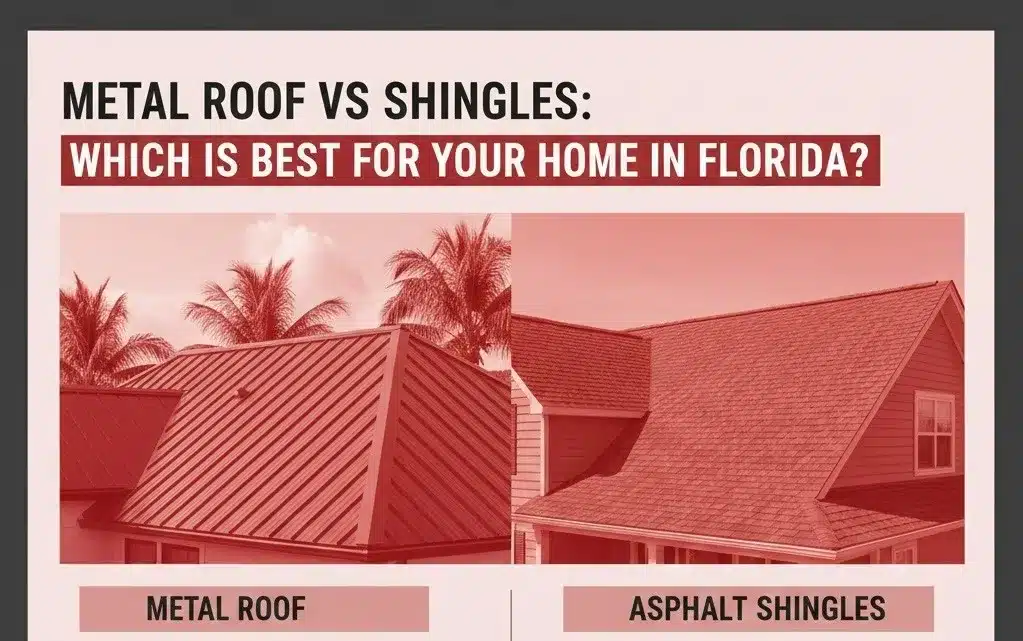
In Florida, metal roofs are generally a better long-term investment compared to asphalt shingles. While shingles are cheaper upfront, they last 15-30 years and can lead to higher insurance costs and frequent replacements.
Metal roofs, though more expensive initially, last 50-70 years, offer better hurricane protection, and provide significant insurance and energy savings over time. Metal roofs are especially beneficial in high-wind zones like Miami-Dade, and can even increase home value.
If you’re staying long-term and want better protection, energy efficiency, and lower long-term costs, metal is the way to go. For short-term stays, or if on a tight budget, asphalt shingles may be suitable.
About 65 percent of Florida roofs are made of asphalt shingles, but that’s changing. Insurance companies are pushing hard for more resilient materials, and metal roofs are getting serious attention from homeowners who are tired of dealing with damage claims and sky-high premiums.
Asphalt Shingle Roofing in Florida: Costs, Lifespan, and Performance
Asphalt shingles cost between $9,000 and $15,000 installed for an average Florida home and last 15 to 30 years depending on quality. In 2025, you’re looking at between three and five dollars per square foot for shingles, which makes them the most affordable roofing option upfront.
But there are shingles and then there are shingles. The cheap 3-tab ones? They’ll barely make it 10 to 15 years in Florida before they start curling and losing granules. You see them on budget rentals and flips.
3-Tab Shingles vs Architectural Shingles
Architectural shingles are where most homeowners land. They’re multi-layered, thicker, and can handle more abuse than 3-tab shingles. That’s the manufacturer’s claim anyway. In reality, Florida’s sun is brutal. The UV exposure cracks them, the humidity gets underneath, and every summer storm tests whether your roofer actually used enough nails.
Florida Shingle Installation Requirements
A minimum of four nails per shingle is required statewide, but code requires six nails if you’re in a high-wind zone or your roof has a steeper pitch. And these aren’t regular nails. Ring-shank nails. The kind that don’t back out when wind gets under your shingles and tries to peel them up like a bad sticker. The Florida Building Code section on roofing specifies these requirements in detail.
Metal Roofing in Florida: Types, Costs, and Hurricane Performance
Metal roofing costs between $15,000 and $30,000 for materials and installation combined, with premium standing seam systems running higher depending on roof complexity. But a properly installed metal roof can last 50 plus years, with some manufacturers claiming 70 years if you maintain it right.
So you’re paying double upfront but getting three times the lifespan, possibly four times if we’re comparing to basic shingles. The whole thing cost just eighty-five hundred dollars for a roof-over metal install, which means they installed directly over old shingles. That’s on the budget end though.
Standing Seam Metal Roofs
Standing seam is the premium option and the best choice for hurricane protection. Properly installed standing-seam metal roofs can withstand 120 to 160 mph winds. The panels interlock along vertical seams, all the fasteners are hidden underneath, and when wind hits, there’s nothing for it to grab onto.
The wind resistance is legit. That’s the difference between watching the news during a hurricane and watching your roof during a hurricane.
Corrugated Metal Roofing
Corrugated metal is cheaper than standing seam and works fine for simple roof structures. It’s the wavy stuff you see on agricultural buildings. Made from galvanized steel or aluminum, corrugated metal offers solid protection at a lower price point but doesn’t perform as well in extreme winds as standing seam.
Metal Shingle Roofing Options
Metal shingles exist too, designed to look like regular shingles but with metal durability. If your HOA has aesthetic requirements or you just prefer a more conventional look, metal shingles give you the appearance of asphalt with the longevity of metal. They’re a middle ground option.
Florida Homeowners Insurance Discounts for Metal Roofs
Metal roofs qualify for insurance discounts of 15 to 25 percent compared to asphalt shingles, with some homeowners getting up to 35 percent off in best-case scenarios. But these discounts don’t happen automatically, and that’s where people make expensive mistakes.
Here’s what actually needs to happen. After your metal roof goes on, you need a wind mitigation inspection. This isn’t the four-point inspection for older homes. This is specifically looking at your roof’s storm resistance features. The clips, the fasteners, how it’s attached to the structure. Then that report goes to your insurance company.
Best Metal Roof Types for Insurance Savings
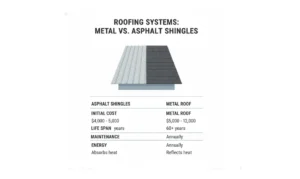
Standing seam metal roofs with hidden fasteners usually score better with insurers than screw-down metal roofs with exposed fasteners because they’re more durable in high winds. If you’re installing metal specifically for insurance savings, standing seam is the way to go.
The discount applies every year, not just once. Over 20 or 30 years, that’s tens of thousands of dollars.
Energy Efficiency: Metal Roof vs Shingle Roof Cooling Costs
Metal roofs reduce cooling costs by 10 to 25 percent in Florida compared to asphalt shingles by reflecting solar heat instead of absorbing it. Florida’s cooling costs are no joke. Your air conditioner runs basically nine months a year, and your roof is either helping or hurting that situation.
Asphalt shingles absorb heat. That’s just physics. Dark shingles can hit 170 degrees in summer sun, and all that heat transfers into your attic. Even with ventilation and insulation, you’re fighting an uphill battle. Some newer shingles have reflective granules that help, but they’re still fundamentally absorbing more than they’re reflecting.
How Metal Roofs Lower Air Conditioning Bills
Metal reflects heat, helping reduce attic temperatures and lowering cooling bills, which can make a noticeable difference in summer electricity bills. That 10 to 25 percent reduction compounds every single year. If your cooling bill runs $200 a month for eight months (which is pretty normal in Florida), saving 15 percent is $240 annually. Over 30 years, that’s over $7,000 just in energy savings, not counting rate increases.
Shingle Roof vs Metal Roof Installation Process in Florida
Shingle installation takes 2 to 3 days for an average home and involves tearing off the old roof, inspecting decking, rolling out underlayment, and nailing shingles from bottom up. A decent crew can finish quickly because every roofer in Florida knows how to do shingles. Labor’s easy to find.
Metal is different. Metal roofs require specialized tools, custom measurements, and precision at every seam. Fewer crews are trained to do it right, and those who are often book out weeks ahead. The panels need to be cut exactly right. The fastening needs to be perfect because one loose panel can become a problem in 100 mph winds.
How Long Does Metal Roof Installation Take?
Installation usually takes longer than shingles. Not weeks longer, but expect a metal roof to take maybe twice as long as shingles. The upside is it’s done once and you’re not thinking about your roof again for decades.
Maintenance Requirements: Shingle Roofs vs Metal Roofs
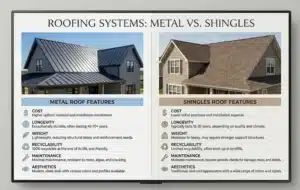
Shingle roofs need regular inspections and repairs every few years for loose shingles, algae growth, and storm damage, while metal roofs require only occasional debris removal and rinsing. The maintenance difference is significant over time.
Asphalt Shingle Maintenance in Florida Climate
Shingles need attention. After a few summers, you might start seeing curling, missing granules, or even minor leaks after storms. Add in algae growth, Florida humidity, and falling branches, and you’re likely looking at spot repairs every few years.
Every storm that comes through, you’re out there looking for loose or missing shingles. Every few years you’re dealing with algae staining, especially on the north side. And around year 15 to 20, you’re looking at replacement whether you want to or not, because insurance is going to force the issue.
Metal Roof Maintenance Requirements
Metal maintenance is mostly checking for debris and rinsing it off occasionally. Metal roofs resist mold, mildew, and algae growth, which are common problems in Florida’s humid climate. The paint can fade over 30 or 40 years depending on the finish, but the actual structure stays intact.
If you get a dent from a particularly nasty hailstorm, it’s mostly cosmetic. While the panels might get dented, it is unlikely that the damage will cause water intrusion. Compare that to tile or shingles where a crack means water’s getting in.
Total Cost Comparison: Shingle vs Metal Roof Over 40 Years
| Aspect | Asphalt Shingles | Metal Roof |
| Initial Cost (2,000 sq ft) | $12,000 – $18,000 | $24,000 – $40,000 |
| Replacement Cost (40 years) | $30,000 – $40,000 | $0 (No replacement needed) |
| Total Cost Over 40 Years | $30,000 – $40,000 | $24,000 – $40,000 |
| Insurance Savings (40 years) | $0 | $48,000 |
| Energy Savings (40 years) | $0 | $10,000 – $12,000 |
| Total Savings (Long-Term ROI) | $0 | $20,000 – $30,000 |
For a 2,000 square foot roof, shingles cost $12,000-$18,000 initially but require replacement every 20 years ($30,000-$40,000 total over 40 years), while metal costs $24,000-$40,000 once and lasts 50-70 years with insurance and energy savings of $50,000-$60,000 over that period.
Here’s the real financial picture that matters. The upfront number is only part of the story.
Asphalt Shingle Long-Term Costs
Shingles at $15,000 lasting 20 years means you’ll replace them at least twice in 40 years. That’s $30,000 minimum, not counting inflation or the cost increase in labor and materials over time. Probably closer to $40,000 when you factor in real-world price increases.
Metal Roof Long-Term Value and ROI
Metal at $30,000 lasting 50 to 70 years means one installation. Then add the insurance savings. One homeowner got twelve hundred dollars a year savings from insurance discounts. Over 40 years, that’s $48,000 in insurance savings alone.
Add energy savings of maybe $200 to $300 a year, that’s another $10,000 to $12,000 over 40 years. Suddenly that expensive metal roof has saved you $20,000 to $30,000 compared to replacing shingles twice.
Current Florida Insurance Market and Roof Age Requirements
Florida insurance companies are refusing coverage for roofs approaching 15 years old regardless of condition, and rates jumped 40 percent in 2023. The insurance market is in chaos. Multiple major insurance companies have stopped writing new policies in Florida entirely or severely restricted coverage.
Many home insurance companies in Miami and Broward counties are refusing to provide coverage for old roofs no matter the roof’s condition. If your roof is approaching 15 years old and you’re trying to get new insurance or renew, you’re going to have problems.
Insurance Commissioner’s Position on Asphalt Shingles
At an insurance industry summit, Florida’s Insurance Commissioner Michael Yaworsky suggested it was time for Florida to move away from asphalt shingles. That’s not a law yet, but when the insurance commissioner is publicly saying maybe shingles aren’t the right choice for Florida, that’s a signal where things are heading.
Which Roof Type Is Best for Your Florida Home?
Choose shingles if you’re on a tight budget and planning to move in 5-10 years, or choose metal if you’re staying long-term in a high-wind zone where insurance savings and hurricane protection justify the higher upfront cost.
If you’re on a tight budget and planning to move in five to ten years, shingles probably make sense. Get decent architectural shingles, make sure they’re installed correctly with proper nailing, and you’ll be fine for your ownership period. The next buyer deals with the replacement timeline.
When Metal Roofs Make More Financial Sense
If you’re staying in your house long-term, especially if you’re in a high-wind zone or anywhere near the coast, metal is the smarter financial play. Yes, it hurts upfront. But between insurance savings, energy savings, and never replacing your roof again, you come out way ahead over 20 to 30 years.
Roof Replacement Considerations for Older Homes
If your current roof is 10 to 15 years old and you’re getting inspection notices from your insurance company, replacing it with metal means you’re done. You won’t be having this conversation again when you’re 65 or 70 years old.
How to Choose a Florida Roofing Contractor
Get multiple quotes but verify each contractor’s Florida license through the state database and ask specifically about their experience with Florida building codes and wind zone requirements. A $12,000 shingle quote versus a $35,000 metal quote looks like the shingle wins. If you are based in orlando, You can choose us, The Best Roofing Contractor in Orlando.
But if the metal quote includes proper ventilation upgrades, better underlayment, and the contractor’s pulling permits and following code exactly, while the shingle quote is bare minimum work, you’re not comparing apples to apples.
Faqs
What is the lifespan of asphalt shingles and metal roofs in Florida?
- Asphalt shingles typically last 15-30 years, but they may require replacement every 20 years in Florida. In contrast, metal roofs can last 50-70 years with proper maintenance.
Are metal roofs more cost-effective than asphalt shingles in the long run?
- While metal roofs have a higher initial cost, they offer significant savings over time due to lower maintenance, energy efficiency, and insurance discounts. Over 40 years, metal roofs can save $20,000-$30,000 compared to replacing asphalt shingles twice.
Do metal roofs offer better hurricane protection than asphalt shingles?
- Yes, metal roofs, particularly standing seam metal roofs, provide superior hurricane protection. They can withstand winds of 120-160 mph, significantly outperforming asphalt shingles during storms.
Shingle or Metal Roof in Florida?
Florida roofs are in a weird spot right now. The old default of cheap shingles every 15 to 20 years doesn’t make as much sense anymore. Insurance companies are pushing back hard on old roofs. The state’s building codes keep getting stricter. Energy costs keep rising.
Metal roofs have gone from being the expensive premium option to being the option that actually makes financial sense for a lot of homeowners. Not everyone. Not if you’re flipping houses or moving in three years. But if you’re planning to stay, the math works.
The upfront cost is real and it’s significant. Finding $30,000 for a roof when you weren’t planning to replace it yet is tough. But if you can make it work, between insurance savings, energy savings, and never replacing your roof again, you’re probably coming out $20,000 to $40,000 ahead over the life of the roof.
And more importantly, when the next hurricane forms in the Gulf and starts heading toward Florida, you’re not wondering if your roof’s going to make it. You already know it will.

Romail Shah is a content strategist and web authority expert who works with Rhino Roofing Orlando’s licensed roofing team to create accurate, trustworthy guides on residential and commercial roofing in Central Florida. His article reflects real expertise and Florida-specific roofing standard