You might hear a roofer say your home has a 4/12 pitch and wonder whether that is steep, low, or something in the middle. That number matters more than it sounds. It affects how water drains, what roofing materials make sense, how easy the roof is to work on, and sometimes even the overall roof replacement cost.
That is why homeowners often ask what is a 4/12 roof pitch. It is a simple measurement once you understand it, but it plays a big role in how a roof performs, especially in a Florida climate with heavy rain, heat, and storm exposure.
What Is a 4/12 Roof Pitch? Quick Answer
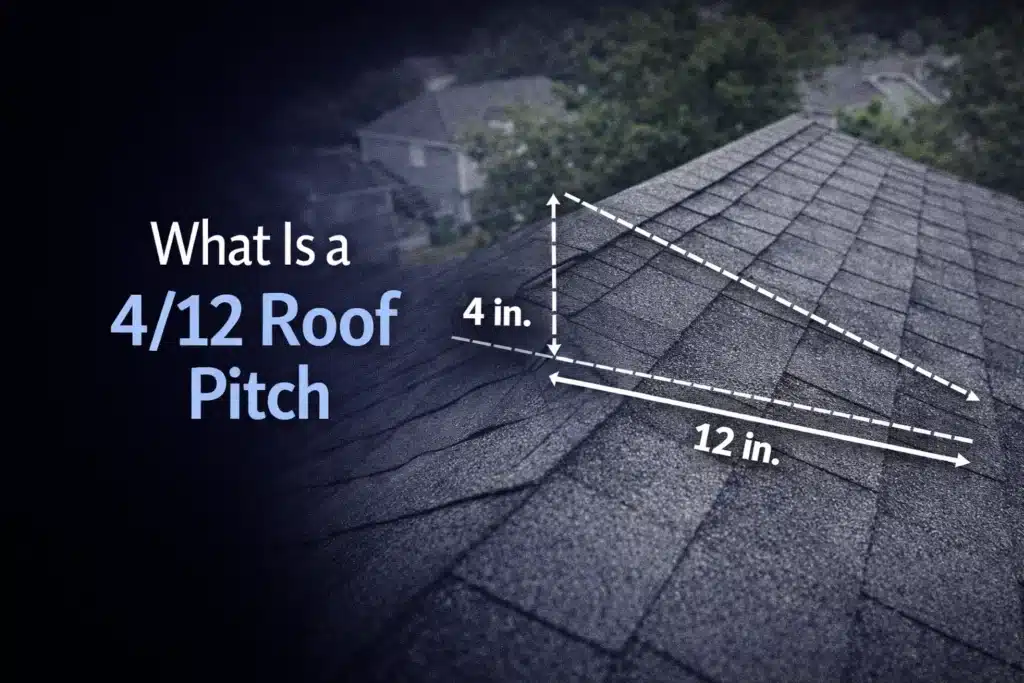
What is a 4/12 roof pitch? A 4/12 roof pitch means the roof rises 4 inches for every 12 inches of horizontal run. In simple terms, it is a moderate low-slope roof, not flat, but not steep either.
A common question we hear is whether a 4/12 roof pitch is good for shingles. In many cases, yes, asphalt shingles can work on a 4/12 roof, but the full system still matters. Underlayment, drainage, installation quality, and roof design all affect performance.
What a 4/12 Roof Pitch Actually Means
Roof pitch is a way to describe slope. The first number tells you how much the roof rises vertically. The second number, usually 12, tells you the horizontal distance.
So with a 4/12 pitch, the roof goes up 4 inches for every 12 inches it runs across.
A simple way to picture it
Imagine placing a level board straight across the roof for 12 inches. If the roof surface rises 4 inches over that distance, that is a 4/12 pitch.
That makes it easier to understand why roof pitch affects water flow. The more the roof rises over that distance, the steeper it is.
Is a 4/12 pitch steep?
A 4/12 pitch is usually seen as moderate to fairly low slope. It is steeper than very low-slope roofing systems, but much less steep than roofs with a 6/12, 8/12, or 10/12 pitch.
For most homeowners, it sits in a middle zone. It still sheds water, but it does not have the sharper angle many people imagine when they think of a steep residential roof.
How a 4/12 Roof Pitch Compares to Other Roof Slopes
A quick comparison makes this easier to understand:
| Roof Pitch | What It Feels Like | General Takeaway |
| 2/12 | Very low slope | Often needs more specialized roofing approach |
| 3/12 | Low slope | Water drainage improves, but material choice matters |
| 4/12 | Moderate low slope | Common on many homes, workable for shingles |
| 6/12 | Medium slope | Stronger drainage and more traditional roof angle |
| 8/12+ | Steeper roof | Better runoff, more labor and access difficulty |
Takeaway:
A 4/12 pitch is not flat, but it is also not steep enough to ignore drainage and installation details.
Why Roof Pitch Matters More Than Homeowners Think
Roof pitch is not just a math term. It affects how the whole roof system performs.
A roof with the wrong material, weak installation, or poor drainage details can struggle even if the pitch technically works for that product. That is one reason a proper roof inspection matters before repair or replacement decisions.
Pitch affects water runoff
With a 4/12 pitch, water can drain off the roof, but it does not rush off as quickly as it would on a steeper slope. That means flashing, underlayment, shingle overlap, and workmanship all matter.
In Florida, where roofs deal with hard rain and frequent storms, slope becomes even more important. A moderate roof pitch can perform well, but it needs a well-built system.
Pitch affects material choice
Some roofing materials perform differently depending on slope. Asphalt shingles often work on 4/12 roofs, but some lower-slope conditions may need added protection or different installation methods.
This is where overall roof design matters more than one number alone.
Is a 4/12 Roof Pitch Good for Shingles?
In many cases, yes. A 4/12 pitch is commonly suitable for shingle roofing, especially asphalt shingles, as long as the roof system is installed properly and local code requirements are followed.
That said, “good for shingles” does not mean every shingle job is automatically equal. Roof age, ventilation, storm exposure, underlayment, and workmanship still play a role.
Why shingles are common on 4/12 roofs
A 4/12 slope gives enough angle for decent water shedding on many residential roofs. That is why shingle systems are often used on this type of pitch.
If you are comparing products, how to choose the best asphalt shingles is one of the most relevant reads.
Why installation details still matter
On a 4/12 pitch, weak installation can show up faster in the form of leaks, premature wear, or moisture-related trouble around penetrations and flashing.
That is one reason homeowners should not focus only on the shingle brand. The full roofing system matters.
What a 4/12 Roof Pitch Means for Drainage in Florida
Florida weather changes the conversation. A pitch that works in a dry climate still needs to handle repeated rain, humidity, wind-driven water, and storm exposure here.
A 4/12 roof pitch can handle drainage reasonably well, but it does not leave much room for sloppy workmanship. Valleys, flashing details, roof penetrations, and edge protection all matter more when hard rain arrives.
Heavy rain exposure matters
Florida roofs often face quick downpours that test drainage fast. If the roof is older, poorly maintained, or already worn, a moderate slope may not save it from water trouble.
That is why homeowners dealing with leaks or storm wear may also want to review what to do after hail, wind, or rain damage.
Maintenance still matters on moderate slopes
A 4/12 pitch is not so steep that debris always clears easily. Leaves, branches, and buildup can still affect water flow if the roof is neglected.
This is where routine care helps. Roof maintenance tips for homeowners fits naturally with this topic.
Does a 4/12 Roof Pitch Affect Roof Cost?
Yes, but not in a simple one-direction way. A 4/12 pitch is often easier and less labor-heavy than very steep roofs, which can help control labor costs. But that does not mean every 4/12 roof is cheap.
Roof cost still depends on:
- total roof size
- material choice
- tear-off complexity
- underlayment needs
- flashing and ventilation work
- decking condition
- roof shape and cut-up design
Why moderate pitch can help labor
Extremely steep roofs often require added safety setup, slower movement, and more labor effort. A 4/12 pitch is usually easier to work on than steep residential roofs.
That can be one cost advantage, though it is only one piece of the pricing picture.
Why the final price still varies
A simple 4/12 gable roof and a complex 4/12 roof with multiple valleys, dormers, and damaged decking are two very different projects.
If cost is a concern, how much does a roof cost is one of the strongest supporting links for this topic.
How to Measure or Identify a 4/12 Roof Pitch
Homeowners do not always need to calculate roof pitch themselves, but it helps to understand the basics.
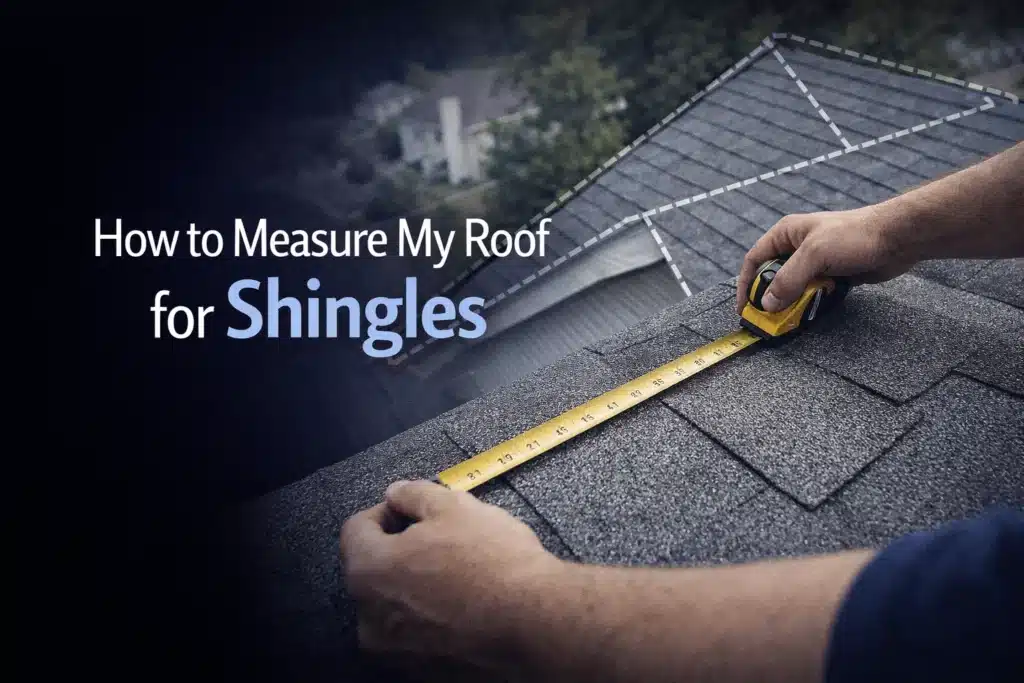
To identify a 4/12 pitch, roofers often measure 12 inches horizontally and then check how many inches the roof rises over that span. If the rise is 4 inches, the pitch is 4/12.
A roofer can confirm it quickly
A contractor can usually identify pitch during a standard site visit or roof inspection. That is the easiest path if the number matters for materials, replacement planning, or quotes.
DIY checks have limits
A homeowner may estimate roof pitch using a level and tape measure, but steepness, access, and roof design can make that harder than it sounds. If safety is an issue, it is better not to climb the roof.
When a 4/12 Pitch May Need More Care
A 4/12 pitch can work well, but certain situations call for extra attention:
- repeated storm exposure
- older underlayment
- worn shingles
- flashing problems
- debris buildup
- low spots around penetrations or valleys
These issues matter because the roof is not steep enough to hide poor drainage for long.
If the roof already has recurring problems, it may be time to compare roof repair with roof replacement rather than keep patching the same trouble spots.
FAQ
What does a 4/12 roof pitch mean?
It means the roof rises 4 inches vertically for every 12 inches of horizontal run.
Is a 4/12 roof pitch steep or low?
It is usually considered a moderate low-slope residential roof. It is not flat, but it is not steep either.
Can shingles be installed on a 4/12 roof pitch?
Yes, in many cases they can, especially asphalt shingles, but the full roofing system and installation quality still matter.
Is a 4/12 roof pitch good for Florida weather?
It can work well, but Florida rain, wind, and storm conditions make proper installation, flashing, and maintenance especially important.
Does a 4/12 roof pitch affect roof replacement cost?
Yes. It can affect labor, safety setup, and material planning, though roof size and condition still matter more overall.
Is a 4/12 roof pitch considered flat?
No. It is a sloped roof, even though it is on the lower side compared with steeper residential roofs.
How do I know if my roof is 4/12?
A roofer can measure it directly, or you can estimate it by checking how much the roof rises over 12 inches of horizontal distance.
Does a 4/12 pitch drain water well?
It usually drains better than very low-slope roofs, but not as quickly as steeper roofs, so workmanship and drainage details matter.
Talk to Rhino Roofing Orlando About Your Roof Slope and Options
If you are not sure what your roof pitch means for shingles, drainage, repairs, or replacement, Rhino Roofing Orlando can help. We can inspect the roof, explain how the slope affects your roofing options, and give you practical next steps. Schedule a roof inspection, request an estimate, or contact Rhino Roofing Orlando to get clear answers.
Conclusion
What is a 4/12 roof pitch? It means the roof rises 4 inches for every 12 inches of horizontal run. In practical terms, it is a moderate low-slope roof that can work well for many homes, including shingle systems, when the full roof is built and maintained the right way.
The number may sound small, but it affects drainage, material choice, labor, and long-term performance. If you want to know how your roof pitch changes your repair or replacement options, the best next step is to have the full roof system looked at in person.