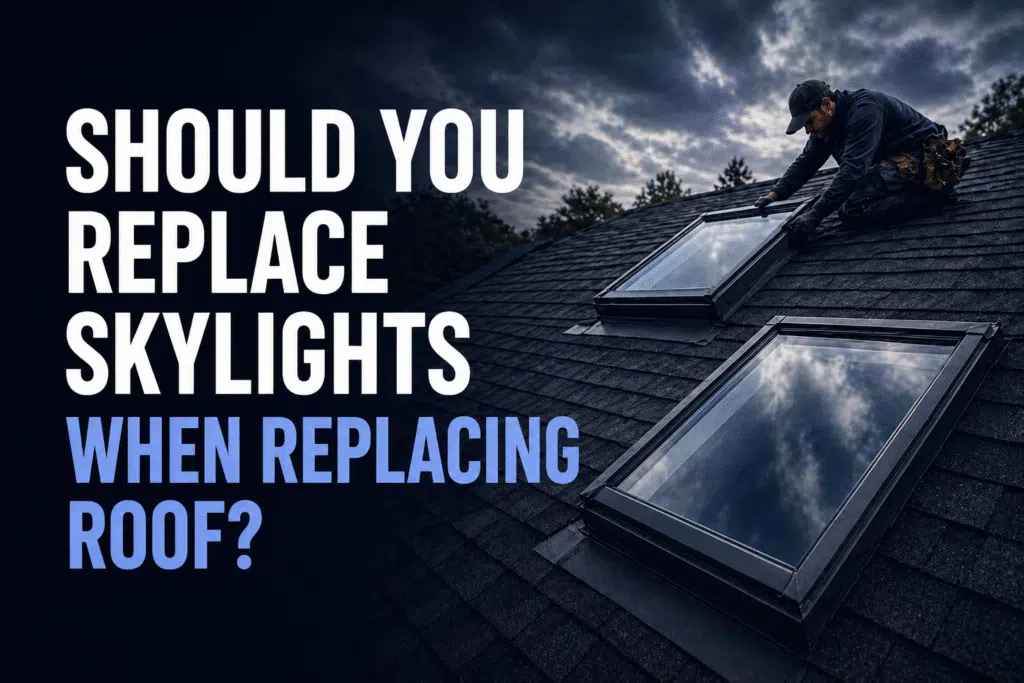
You’re planning a roof replacement, and then you look up at your skylights and wonder… do those need to be replaced too?
It’s a common question, and ignoring it can lead to leaks, extra costs, or having to redo part of your new roof later. If you’re asking should you replace skylights when replacing roof, the answer depends on age, condition, and how your new roofing system is being installed.
Should You Replace Skylights When Replacing Roof? Quick Answer
In many cases, yes, you should replace skylights when replacing your roof, especially if they are older or show signs of wear. Skylights and roofing systems work together, and replacing the roof without updating aging skylights can increase the risk of leaks.
As we often explain to homeowners, if your skylights are more than 10–15 years old, replacing them during a roof replacement is usually the smarter and more cost-effective choice.
Why Skylights Matter During a Roof Replacement
Skylights are not just add-ons. They are integrated into your roofing system.
They penetrate the roof system
Any opening in your roof creates a potential weak point. Skylights rely on proper flashing and sealing to stay watertight.
They depend on surrounding materials
When a new roof is installed, the surrounding materials change. Old skylights may not align well with new flashing systems.
This is why skylights often become problem areas after roof replacements if not addressed properly.
When You Should Replace Skylights
Not every skylight needs to be replaced, but these situations strongly suggest it.
1. Skylight is over 10–15 years old
Most skylights don’t last as long as a roof. Even if they look fine, seals and flashing may be near failure.
2. You’ve had leaks or moisture issues
Signs include:
- water stains around the skylight
- condensation between glass panes
- bubbling drywall
If leaks have occurred before, replacement is usually the safest option.
3. The flashing is outdated or damaged
Flashing is what keeps water out. If it’s worn or incompatible with the new roof system, it becomes a risk.
A proper roof inspection can confirm whether flashing is still reliable.
4. You’re upgrading your roof system
New roofing materials often work better with updated skylight systems.
For example, switching materials may require different flashing kits or installation methods.
When You Might Keep Existing Skylights
In some cases, keeping skylights makes sense.
Conditions where keeping them is okay
- skylight is relatively new (under 10 years)
- no leaks or visible damage
- flashing system is compatible with new roof
Even then, resealing or flashing updates may still be recommended.
Cost Comparison: Replace Now vs Replace Later
This is where many homeowners make the wrong call.
| Option | Cost Impact | Risk Level |
| Replace during roof replacement | Lower overall cost | Low |
| Replace later | Higher (labor + roof disruption) | Higher |
Takeaway: Replacing skylights during a roof project avoids future labor costs and prevents disturbing your new roof.
What Happens If You Don’t Replace Skylights?
Skipping replacement can create problems down the line.
Common risks
- leaks around skylight edges
- failed seals after new roof installation
- need to remove roofing sections later
In Florida, with heavy rain and humidity, these issues can appear faster than expected.
For storm-related concerns, see what to do after hail, wind, or rain damage.
How Skylights Are Replaced During Roof Work
Replacing skylights during a roof project is straightforward.
Typical process
- old skylight removed
- opening inspected and adjusted
- new skylight installed
- new flashing integrated with roofing system
This ensures everything works together as one system.
If you want to understand how roofing projects are structured overall, this guide on roof replacement process explains it step by step.
Modern Skylights vs Older Skylights
New skylights offer better performance.
Improvements in newer models
- better insulation
- improved sealing systems
- stronger leak protection
- energy efficiency
Upgrading during roof replacement can improve comfort and reduce long-term maintenance.
Florida-Specific Considerations
Orlando weather makes skylight decisions more important.
Heavy rain exposure
Skylights must handle consistent rain without leaking.
Humidity impact
Moisture buildup can affect seals and interior finishes.
Storm resistance
High winds can stress flashing and mounting points.
In this climate, replacing older skylights during roof work is often the safer option.
FAQ Section
Should you replace skylights when replacing roof?
In many cases, yes, especially if they are older or have shown signs of wear.
How long do skylights last?
Typically 10–20 years depending on quality and maintenance.
Can old skylights cause leaks after roof replacement?
Yes, especially if flashing or seals are worn.
Is it cheaper to replace skylights during a roof replacement?
Yes, because labor and access costs are already covered.
Do new skylights improve energy efficiency?
Yes, modern skylights often provide better insulation.
Can skylights be resealed instead of replaced?
In some cases, but it depends on age and condition.
Will replacing skylights extend roof life?
It helps prevent leak-related damage, which supports overall roof longevity.
Do all roof replacements require skylight replacement?
No, but it’s recommended in many situations.
Not Sure If Your Skylights Should Be Replaced?
Every roof and skylight setup is different. Rhino Roofing Orlando can inspect your roof and skylights together, explain your options, and help you decide what makes the most sense long term. Contact our team or schedule an inspection to get clear, practical advice.
Conclusion
So, should you replace skylights when replacing roof? In many cases, yes. It reduces risk, prevents future leaks, and saves money compared to replacing them later.
If your skylights are older or showing signs of wear, replacing them during a roof project is often the smartest move. A coordinated system means better protection and fewer surprises down the road.

Romail Shah is a content strategist and web authority expert who works with Rhino Roofing Orlando’s licensed roofing team to create accurate, trustworthy guides on residential and commercial roofing in Central Florida. His article reflects real expertise and Florida-specific roofing standard