You’re looking at roof specs or planning a project, and then you see “3/12 pitch.” It sounds technical, but it directly affects how your roof performs, what materials you can use, and even how much your project will cost.
If you’re wondering what is a 3/12 pitch roof, here’s a simple, practical explanation without the confusion.
What Is a 3/12 Pitch Roof? Quick Answer
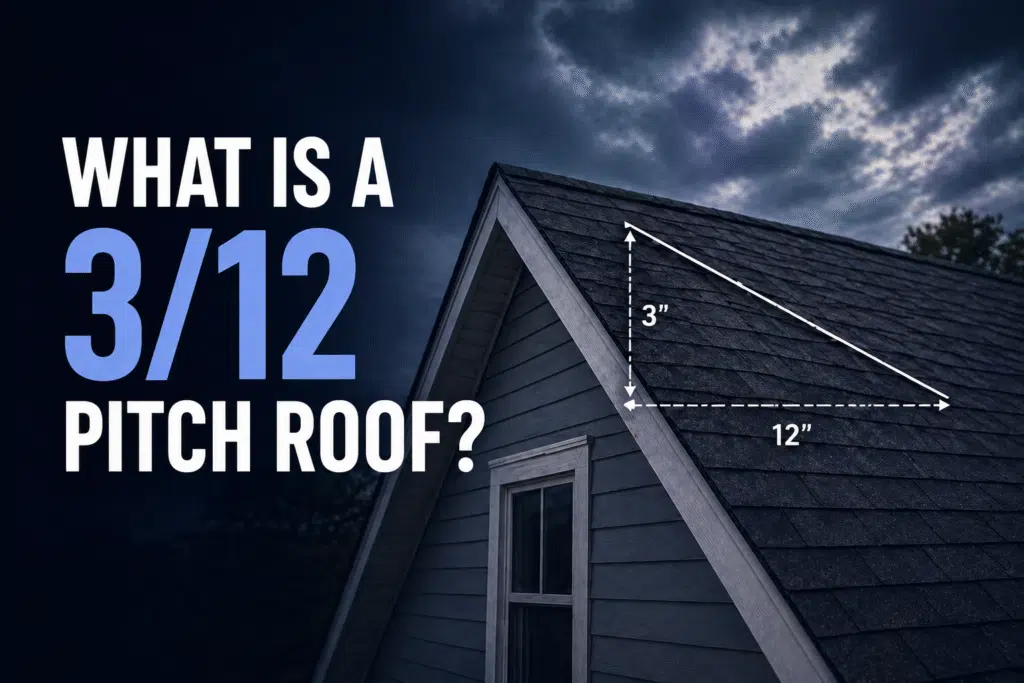
A 3/12 pitch roof means the roof rises 3 inches vertically for every 12 inches (1 foot) horizontally. This is considered a low-slope roof, not flat, but much less steep than most residential roofs.
A common question we hear is whether this type of roof needs special materials. The answer is yes in many cases. Because water drains more slowly on a 3/12 slope, material choice and installation quality matter more than on steeper roofs.
Understanding Roof Pitch in Simple Terms
Roof pitch is just a way to describe how steep a roof is.
What “3/12” actually means
- “3” = vertical rise (inches)
- “12” = horizontal run (inches)
So for every 12 inches across, the roof goes up 3 inches.
How steep is that?
A 3/12 pitch is relatively shallow. You can walk on it more easily than a steep roof, but it still sheds water unlike a flat roof.
Is a 3/12 Roof Considered Flat or Sloped?
This is where many homeowners get confused.
It’s not flat
Flat roofs typically have a pitch below 2/12. A 3/12 roof has enough slope to move water off the surface.
But it’s still low slope
In roofing terms, anything between 2/12 and 4/12 is considered low slope. That means:
- water drains slower
- higher risk of leaks if installed poorly
- requires careful material selection
If you’re unsure about your roof type, a quick roof inspection can confirm details.
Best Roofing Materials for a 3/12 Pitch Roof
Not every material works well on low-slope roofs.
Good options
- metal roofing (excellent water shedding)
- modified bitumen or membrane systems
- certain flat roofing systems
Use with caution
- asphalt shingles (minimum pitch requirements apply)
- tile roofing (often not recommended at this slope)
If you’re comparing materials, this guide on metal roof vs shingles breaks down performance differences.
Why Roof Pitch Matters More Than You Think
Pitch affects more than just appearance.
1. Water drainage
Lower slope = slower drainage
That increases the risk of water pooling or leaks.
2. Material performance
Some materials rely on gravity to shed water. On a 3/12 roof, that effect is weaker.
3. Installation complexity
Low-slope roofs need:
- better underlayment
- tighter sealing
- more precise installation
Common Problems With 3/12 Pitch Roofs
These roofs work well, but only when installed correctly.
Potential issues
- standing water after heavy rain
- leaks around flashing areas
- faster wear if materials are not suited
In Florida, where storms and heavy rain are common, these risks increase. That’s why proper installation matters more than the pitch itself.
For storm-related concerns, see what to do after hail, wind, or rain damage.
Can You Use Shingles on a 3/12 Roof?
Yes, but there are conditions.
Minimum pitch for shingles
Most asphalt shingles require at least a 2/12 pitch, but:
- additional underlayment is often required
- installation must follow strict guidelines
What homeowners should know
Shingles can work, but they are not always the best long-term option for low slopes. Many homeowners in Florida choose metal roofing for better durability.
3/12 Roof vs Steeper Roofs
Here’s a quick comparison to help put things into perspective.
| Feature | 3/12 Pitch Roof | Steeper Roof (6/12+) |
| Water drainage | Moderate | Fast |
| Material flexibility | Limited | More options |
| Installation cost | Can be higher (due to sealing) | Standard |
| Walkability | Easier | More difficult |
| Leak risk | Higher if done poorly | Lower overall |
A 3/12 roof works well, but it requires smarter material and installation choices.
When to Repair vs Replace a 3/12 Roof
Low-slope roofs often reach a point where repair is no longer enough.
Repair makes sense when
- damage is localized
- roof is still relatively new
- no widespread leaks
Replacement makes sense when
- repeated leaks occur
- materials are near end of life
- poor installation is causing ongoing issues
If you’re unsure, this guide on need roof repair or roof replacement helps clarify the decision.
Florida-Specific Considerations for 3/12 Roofs
Orlando weather changes how a roof performs.
Heavy rain and humidity
Water sits longer on low slopes, which increases wear.
Storm exposure
Wind-driven rain can push water under materials if installation is weak.
Heat impact
High temperatures can shorten the lifespan of certain roofing materials.
This is why choosing the right system matters more than just the pitch.
FAQ Section
Is a 3/12 pitch roof steep?
No, it is considered a low-slope roof.
Can you walk on a 3/12 roof?
Yes, it is generally safer to walk on compared to steeper roofs, but caution is still required.
Is a 3/12 roof good for Florida?
Yes, but it must use the right materials and proper installation to handle heavy rain.
Do 3/12 roofs leak more?
They can if installed poorly or if the wrong materials are used.
What is the minimum pitch for shingles?
Most shingles require at least a 2/12 pitch, but extra protection is needed at lower slopes.
Is metal roofing better for a 3/12 pitch?
Yes, metal roofing performs very well on low-slope roofs.
How long does a 3/12 roof last?
It depends on material, installation quality, and maintenance.
Do I need special underlayment for a low-slope roof?
Yes, enhanced underlayment is often required to prevent water intrusion.
Not Sure If Your Roof Pitch Is Causing Problems?
If your roof has a low slope like 3/12 and you’re dealing with leaks or material issues, Rhino Roofing Orlando can help. We’ll inspect your roof, explain what’s happening, and recommend the right solution based on real conditions. Schedule a roof inspection or contact our team to get clear answers.
Conclusion
Understanding what is a 3/12 pitch roof helps you make better decisions about materials, repairs, and long-term performance. It’s a low-slope roof that works well when installed correctly, but it leaves less room for error.
If your roof shows signs of trouble or you’re planning a replacement, getting professional input early can save time, money, and frustration.

Romail Shah is a content strategist and web authority expert who works with Rhino Roofing Orlando’s licensed roofing team to create accurate, trustworthy guides on residential and commercial roofing in Central Florida. His article reflects real expertise and Florida-specific roofing standard