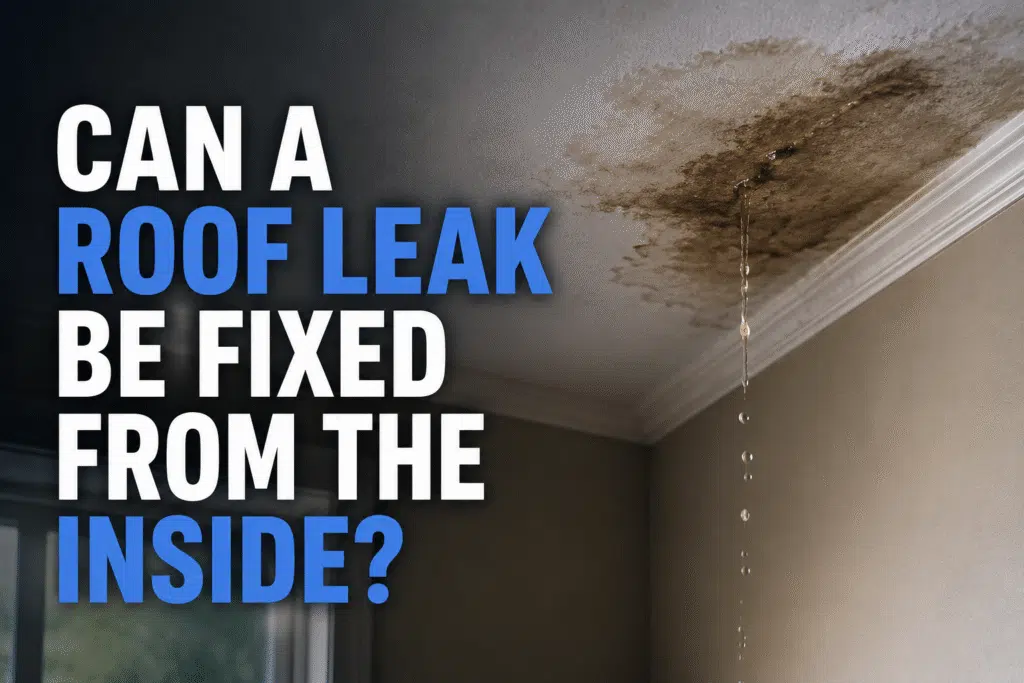
A roof leak often becomes noticeable from inside the home first. You may see a ceiling stain, dripping water, attic moisture, or bubbling drywall before you ever see roof damage outside. That leads many homeowners to ask: can a roof leak be fixed from the inside?
The honest answer is that a roof leak can sometimes be temporarily controlled from the inside, but the actual source usually needs to be repaired from the outside. Interior leak work may slow water intrusion during a storm, but it does not replace proper roof repair.
Can a Roof Leak Be Fixed From the Inside? Quick Answer
Yes, a roof leak can sometimes be temporarily fixed from the inside, especially during active rain when exterior roof work is unsafe. Homeowners or roofers may use temporary sealant, catch water, redirect dripping, or patch a small attic leak area until permanent repair is possible.
However, this is usually not a long-term solution. The real leak source is often on the exterior roof surface, such as damaged shingles, flashing, underlayment, vents, or roof decking. A professional roof inspection is usually needed to find and repair the actual cause.
Why Roof Leaks Usually Need Exterior Repair
A roof is designed to shed water from the outside.
When water gets inside, it usually means something on the exterior roofing system has failed.
Common exterior causes of roof leaks
A roof leak may come from:
- missing shingles
- cracked shingles
- damaged flashing
- worn pipe boots
- roof valleys
- storm damage
- punctures
- damaged underlayment
- poor roof installation
Interior patching may slow the leak, but it does not fix these exterior problems.
Homeowners dealing with leaks often start with roof repair to stop the source properly.
When an Inside Roof Leak Fix Can Help
Interior leak work can be useful in emergency situations.
This is especially true during heavy rain, storms, or unsafe roof conditions.
During active rain
Roofers usually cannot safely complete full exterior repairs during severe rain or lightning.
In that situation, temporary inside control may help reduce damage until the weather clears.
When water is entering the attic
If the leak is visible from inside the attic, a temporary patch may help slow water intrusion.
This may involve sealing a small opening, placing a container under the drip, or redirecting water away from insulation and ceilings.
When immediate damage control is needed
Inside leak control can help protect:
- ceilings
- drywall
- flooring
- furniture
- insulation
- electrical areas
But it should be treated as damage control, not a permanent roofing solution.
What Homeowners Can Do From Inside During a Roof Leak
If water is actively coming in, safety comes first.
Step 1: Catch the water
Place buckets, towels, or containers under dripping areas.
If water is pooling in the ceiling, carefully release pressure only if it is safe to do so. A ceiling bulge can eventually burst and cause more damage.
Step 2: Move valuables away
Move furniture, electronics, rugs, and personal items away from the leak area.
This can reduce interior repair costs later.
Step 3: Check the attic if safe
If you can safely access the attic, look for where water is entering.
Do not step between joists or touch electrical wiring near water.
Step 4: Document the damage
Take photos and videos of:
- ceiling stains
- active dripping
- attic moisture
- damaged insulation
- visible roof openings
- storm conditions
Documentation may help if an insurance claim becomes necessary.
Can You Seal a Roof Leak From the Attic?
Sometimes, but only temporarily.
Interior sealant may slow water
Roofing sealant, patch material, or temporary leak-control products may help reduce dripping from the attic side.
However, water is still entering the roofing system from above. That means moisture can continue damaging the underlayment, decking, or surrounding materials.
Why attic patches often fail
Interior patches often fail because:
- water pressure continues from outside
- wet materials do not bond well
- the source may be higher up the roof
- water may travel before dripping inside
- storm movement can reopen the gap
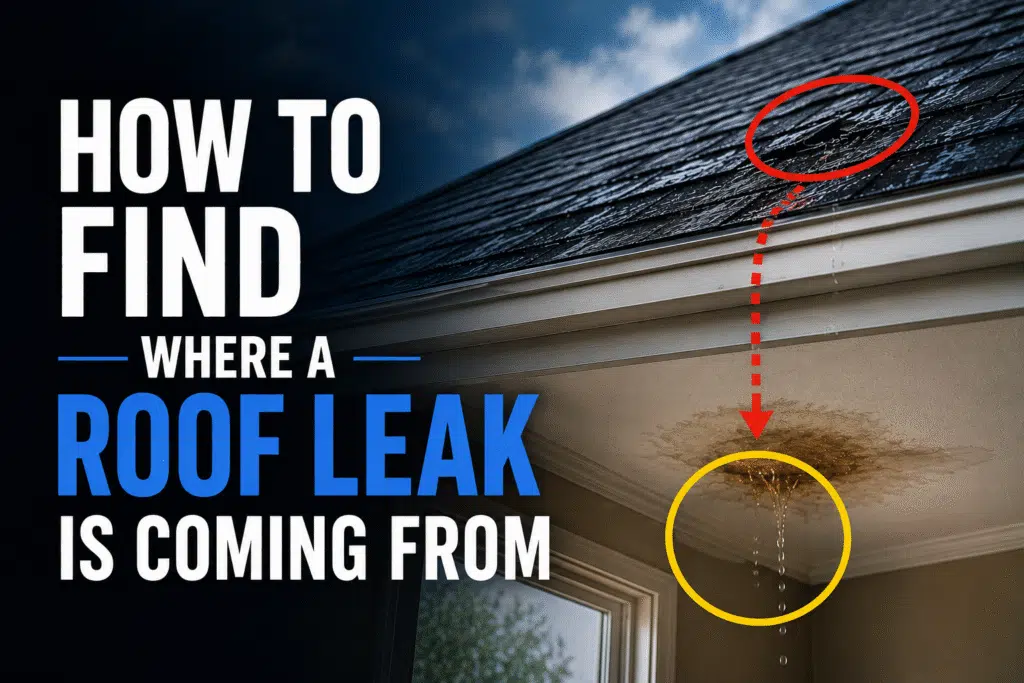
A leak that appears in one attic area may actually start several feet away on the roof.
For a deeper look at leak causes, homeowners can review how do I fix a leaky roof.
Why Finding the Source Is Difficult From Inside
Water does not always drip straight down.
It can travel along rafters, decking, nails, insulation, and framing before it appears inside the home.
The visible leak may not be the real leak source
For example, water may enter near a roof vent but show up near a ceiling light several feet away.
That is why professional roofers inspect both the inside and outside of the roof.
Common hidden leak paths
Leaks often travel through:
- attic framing
- roof decking seams
- insulation
- pipe penetrations
- skylight framing
- wall cavities
This makes full diagnosis difficult without a proper roof inspection.
Temporary Inside Fix vs Permanent Roof Repair
Here is a simple comparison:
| Inside Leak Control | Permanent Roof Repair |
| Helps during emergencies | Fixes the actual source |
| May slow water temporarily | Restores roof protection |
| Does not repair exterior damage | Addresses shingles, flashing, or underlayment |
| Useful during storms | Needed after weather clears |
| Short-term solution | Long-term solution |
Takeaway:
An inside fix can help control damage, but the roof usually needs exterior repair to stop the leak properly.
When a Roof Leak May Need More Than Repair
Not every roof leak can be solved with a small patch.
Sometimes the leak points to a larger roofing issue.
Full replacement may be needed when
- leaks happen in multiple areas
- the roof is very old
- shingles are brittle or curling
- underlayment is failing
- roof decking is soft or rotted
- repairs keep failing
- storm damage is widespread
Homeowners unsure whether repair is enough often review when does a roof leak need full replacement.
Florida Weather Makes Fast Leak Repair Important
In Orlando and across Florida, roof leaks can worsen quickly.
Heavy rain, humidity, heat, and storm seasons create the perfect conditions for small leaks to become larger problems.
Moisture can spread fast
Even a small leak can lead to:
- stained ceilings
- mold growth
- damaged insulation
- wood rot
- drywall damage
- electrical hazards
Storms can reopen temporary patches
A temporary inside patch may hold for a short time, but Florida storms can quickly push water back through weak roof areas.
After severe weather, homeowners should also review what to do after hail, wind, or rain damage.
When Tarping May Be Better Than an Inside Fix
If the roof has active storm damage, tarping may provide stronger temporary protection than an interior patch.
Roof tarping protects from the outside
A properly installed tarp can help reduce water entry until permanent repairs are completed.
This is often used after:
- missing shingles
- fallen tree damage
- storm punctures
- major roof openings
- hurricane damage
Homeowners can learn more from cost to tarp a roof and how to tarp a roof.
What a Roofer Checks After an Interior Leak
A professional roofer usually checks more than the ceiling stain.
Inspection may include
- attic leak path
- roof decking condition
- underlayment damage
- shingle condition
- flashing areas
- roof vents
- skylights
- valleys
- storm damage
- moisture inside insulation
This helps determine whether the leak needs a small repair, larger section repair, or full replacement.
Can Interior Water Damage Continue After the Roof Is Fixed?
Yes, if wet materials are not dried properly.
Even after the roof leak source is repaired, homeowners may still need to address interior moisture.
Interior cleanup may include
- drying insulation
- replacing damaged drywall
- checking attic moisture
- removing mold-prone materials
- repainting stained areas
- checking electrical safety
Stopping the roof leak is step one. Drying and repairing the inside is step two.
Need Help Fixing a Roof Leak in Orlando?
An inside patch may slow the water, but the roof still needs to be checked from the outside. Rhino Roofing Orlando can inspect the leak source, identify hidden storm or flashing damage, and recommend the right repair before the problem spreads. Schedule a roof inspection or contact Rhino Roofing Orlando for professional roof leak repair.
Conclusion
So, can a roof leak be fixed from the inside? Sometimes it can be temporarily controlled from inside the attic or ceiling area, especially during active rain or emergency conditions.
However, the permanent fix usually requires exterior roof repair. The leak source may involve damaged shingles, flashing, underlayment, vents, valleys, or roof decking. For Florida homeowners, fast inspection and proper repair are the safest ways to prevent water damage from becoming more expensive.
FAQ Section
Can a roof leak be fixed from the inside permanently?
Usually no. Interior fixes are typically temporary because the actual leak source is usually on the exterior roof surface.
Can I seal a roof leak from the attic?
You may be able to slow a small leak temporarily, but the exterior roof still needs proper repair.
What should I do first when my roof is leaking?
Catch the water, protect belongings, document damage, avoid electrical hazards, and schedule a roof inspection.
Is it safe to go into the attic during a leak?
Only if you can do so safely. Avoid wet electrical areas and never step directly on attic insulation or drywall.
Why does my ceiling leak but I cannot see roof damage outside?
Water may enter through hidden flashing, vents, valleys, or small openings that are not visible from the ground.
Can roof tarping stop a leak temporarily?
Yes. A properly installed roof tarp can reduce water intrusion until permanent repairs are completed.
Does one roof leak mean I need replacement?
Not always. One isolated leak may only need repair. Multiple leaks or an old roof may point toward replacement.
How fast should a roof leak be repaired?
As soon as possible. Florida rain and humidity can quickly turn a small leak into major interior damage.

Romail Shah is a content strategist and web authority expert who works with Rhino Roofing Orlando’s licensed roofing team to create accurate, trustworthy guides on residential and commercial roofing in Central Florida. His article reflects real expertise and Florida-specific roofing standard