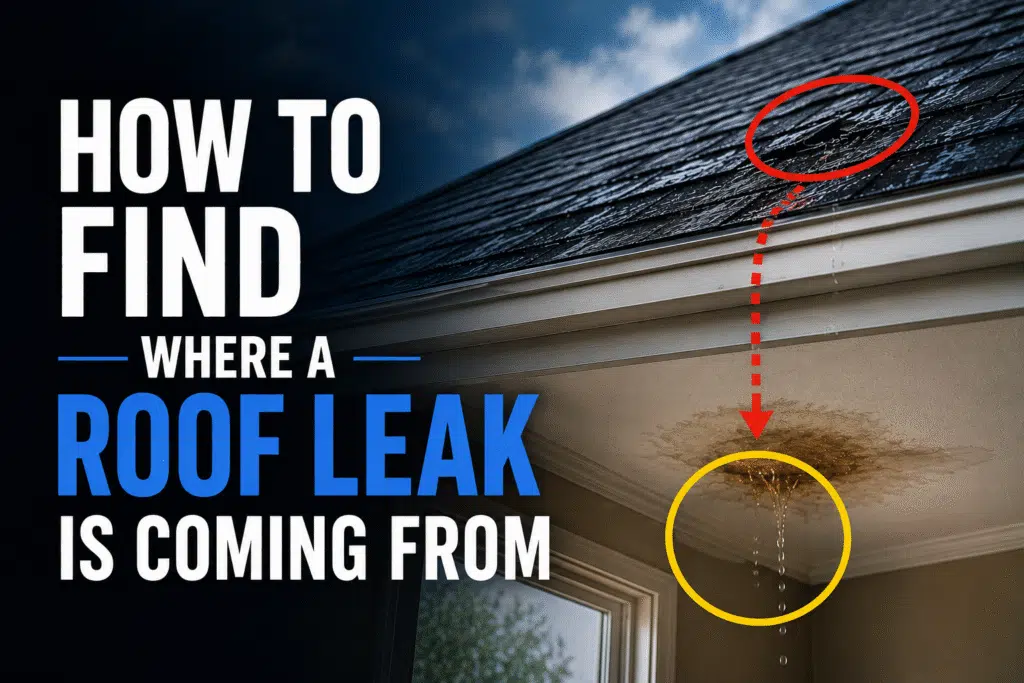
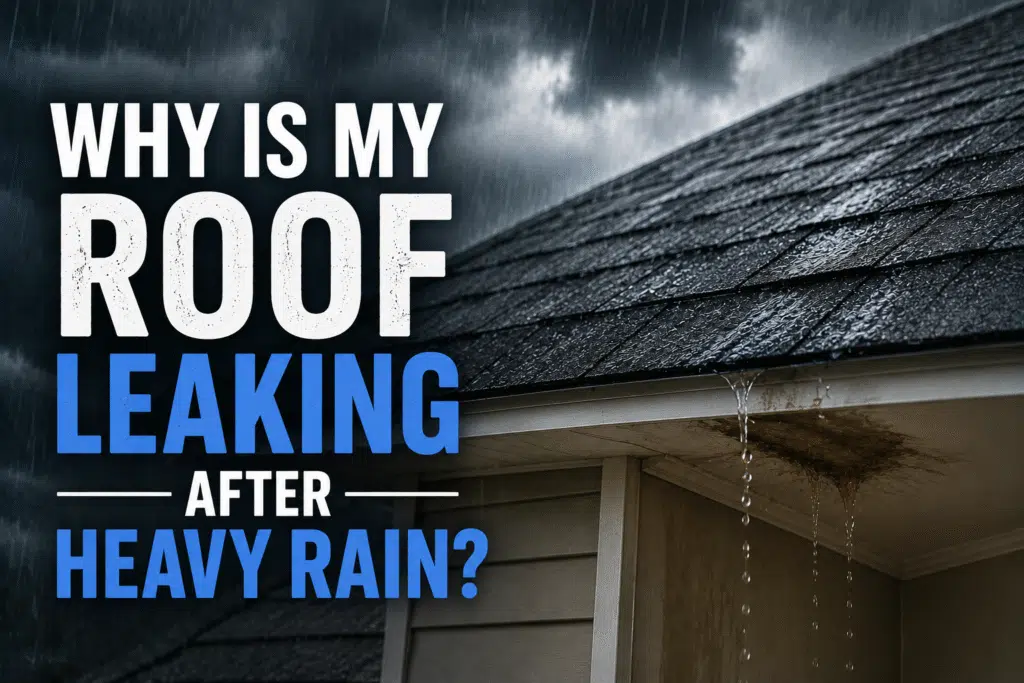
A roof may seem fine during light rain but suddenly leak during a heavy storm. That can be confusing for homeowners, especially when there are no obvious missing shingles or visible roof damage from the ground.
If you are asking why is my roof leaking after heavy rain, the most likely causes include damaged shingles, failing flashing, clogged gutters, worn underlayment, roof valley problems, storm damage, or water being pushed under the roof system by wind-driven rain.
Why Is My Roof Leaking After Heavy Rain? Quick Answer
Your roof may leak after heavy rain because water is entering through a weak point that only fails when rainfall is intense. Common causes include damaged shingles, cracked flashing, clogged gutters, worn pipe boots, roof valley issues, low-slope drainage problems, or old underlayment.
As we often explain to homeowners, heavy rain exposes roofing problems faster than normal rain. A small weakness may stay hidden for months, then show up as a ceiling stain, attic drip, or active leak during a Florida storm.
Why Heavy Rain Causes Roof Leaks
Heavy rain puts more pressure on the roofing system than regular rainfall.
A roof is designed to shed water quickly. When rain falls hard, water volume increases, gutters fill faster, and wind can push rain under shingles, flashing, and roof edges.
Small weaknesses become obvious
A tiny crack, loose shingle, or worn seal may not leak during light rain.
But during heavy rain, water can overwhelm weak areas and find its way into:
- roof decking
- attic insulation
- ceiling drywall
- wall cavities
- interior rooms
That is why a professional roof inspection is important when leaks only happen during storms.
Common Reasons Your Roof Leaks After Heavy Rain
There are several possible causes. Some are minor and repairable, while others may point to larger roof failure.
Damaged or Missing Shingles
Shingles are the first layer of protection against rain.
If shingles are cracked, lifted, curled, or missing, heavy rain can reach the underlayment and decking beneath.
Storms often loosen shingles
Florida storms can loosen shingles through wind uplift and repeated rain exposure.
Common signs include:
- shingles in the yard
- lifted shingle edges
- dark exposed roof patches
- loose granules in gutters
- roof sections that look uneven
Homeowners with missing shingles can review can missing shingles be replaced.
Failing Flashing Around Roof Penetrations
Flashing protects the areas where the roof meets another surface or object.
These areas are common leak points because they interrupt the normal roof surface.
Common flashing leak areas
Flashing problems often happen around:
- chimneys
- skylights
- roof vents
- walls
- valleys
- pipe penetrations
If flashing is loose, cracked, rusted, or poorly sealed, heavy rain can push water through the gap.
This type of issue often requires professional roof repair before interior damage spreads.
Clogged Gutters or Poor Drainage
Sometimes the roof itself is not the only problem.
Clogged gutters can cause rainwater to back up near roof edges, fascia, and soffits.
How clogged gutters create leaks
When gutters overflow, water may:
- run behind fascia boards
- soak roof edges
- enter under shingles
- damage soffits
- pool near valleys
Florida storms can dump a lot of water quickly, so clean drainage matters.
Homeowners dealing with drainage issues may also consider gutter installation.
Worn or Damaged Roof Underlayment
Underlayment sits beneath shingles and above the roof decking.
It acts as a secondary moisture barrier when water gets past the outer roofing material.
Old underlayment can fail during heavy rain
If the underlayment is cracked, torn, or deteriorated, it may not stop water during strong storms.
This is common on older roofs where shingles may still look acceptable from the ground, but the layers underneath are wearing out.
Homeowners can learn more from what is roof underlayment.
Roof Valley Problems
Roof valleys carry a large amount of water because two roof slopes meet there.
During heavy rain, valleys become one of the busiest drainage points on the roof.
Valleys leak when water flow is too heavy
Valley leaks may happen because of:
- damaged valley flashing
- debris buildup
- poor installation
- worn underlayment
- cracked shingles near the valley
A small issue in a valley can create a large leak because so much water moves through that area.
Wind-Driven Rain
In Florida, heavy rain often comes with strong wind.
Wind-driven rain can push water sideways under shingles, flashing, and roof edges.
Why this matters in Orlando storms
Even if shingles are designed to shed downward rainfall, strong wind can force water into areas where it normally would not go.
This is especially common around:
- roof edges
- vents
- ridge areas
- flashing
- low-slope sections
After severe weather, homeowners often review what to do after hail, wind, or rain damage.
Low-Slope Roof Sections
Low-slope roof areas drain more slowly than steeper roof sections.
If water sits too long, it can find small openings and leak inside.
Shingles need enough slope to drain properly
Asphalt shingles work best when the roof slope allows water to run off quickly.
If the slope is too low or the underlayment is not installed correctly, heavy rain increases leak risk.
Homeowners researching slope concerns can review what roof pitch is best for shingles.
Roof Age and Material Wear
An older roof is more likely to leak during heavy rain because the materials have already lost strength.
Aging roof signs
Watch for:
- curling shingles
- cracked shingles
- granule loss
- brittle roofing material
- faded shingles
- repeated leaks
- soft spots on the roof deck
If your roof is older and leaks after heavy rain, the issue may be more than one small repair.
Homeowners comparing age and condition often review when is a roof too old to repair.
Could the Leak Be Coming From Somewhere Else?
Not every water stain is caused by roof shingles.
Sometimes water enters through nearby building components and appears like a roof leak.
Other possible water entry points
These may include:
- attic condensation
- plumbing leaks
- AC drain issues
- chimney cracks
- siding gaps
- window leaks
- poorly sealed exterior walls
A proper inspection helps separate roof leaks from other moisture problems.
What to Do When Your Roof Leaks After Heavy Rain
A roof leak should be handled quickly, especially in Florida where moisture damage can spread fast.
Step 1: Protect the interior
Move furniture, electronics, rugs, and valuables away from the leak area.
Place buckets or towels where water is dripping.
Step 2: Document the damage
Take photos and videos of:
- ceiling stains
- dripping water
- wet insulation
- attic moisture
- exterior storm damage
- shingles in the yard
Documentation may help if an insurance claim is needed.
Step 3: Avoid climbing on the roof
A wet roof is dangerous.
Even if the damage seems small, wait for professional help instead of walking on slippery shingles or tiles.
Step 4: Schedule a roof inspection
A roofer can check the leak source, roof condition, flashing, underlayment, attic moisture, and decking.
This helps determine whether the issue needs repair, partial replacement, or full replacement.
Repair vs Replacement After Heavy Rain Leaks
Not every heavy rain leak requires a new roof.
Here is a simple breakdown:
| Situation | Repair May Work | Replacement May Be Better |
| One isolated leak | ✔ | |
| Damaged flashing | ✔ | |
| Few missing shingles | ✔ | |
| Roof is newer | ✔ | |
| Multiple leaks | ✔ | |
| Old roof with worn shingles | ✔ | |
| Soft or rotted decking | ✔ | |
| Repeated leaks after repairs | ✔ |
Takeaway:
A heavy rain leak may only need repair if the damage is isolated. But repeated leaks, old roofing materials, or widespread damage may point toward replacement.
When a Heavy Rain Leak Needs Full Replacement
A full roof replacement may be needed when the leak is part of a larger roofing system failure.
Replacement may make sense if
- the roof leaks in multiple areas
- repairs keep failing
- the roof is near the end of its lifespan
- shingles are brittle or curling
- underlayment is failing
- decking is soft or rotted
- storm damage is widespread
Homeowners unsure about the decision can review when does a roof leak need full replacement.
Leaking Roof After Heavy Rain in Orlando?
A roof leak after heavy rain is a warning sign that water is getting through somewhere. Rhino Roofing Orlando can inspect the roof, find the real leak source, and explain whether repair or replacement is the right option. Schedule a roof inspection or contact Rhino Roofing Orlando for professional roof leak repair.
Conclusion
So, why is my roof leaking after heavy rain? Heavy rain can expose damaged shingles, failing flashing, clogged gutters, worn underlayment, valley problems, low-slope drainage issues, or storm damage that may not show up during normal rain.
The best next step is to identify the source before the leak spreads. A small repair may solve the issue if the damage is isolated, but repeated leaks or an aging roof may need more serious roofing work.
FAQ Section
Why does my roof only leak during heavy rain?
Heavy rain creates more water volume and pressure, which can expose small weaknesses that do not leak during light rain.
Can wind-driven rain cause roof leaks?
Yes. Strong wind can push rain under shingles, flashing, vents, and roof edges.
Can clogged gutters cause a roof leak?
Yes. Clogged gutters can force water to back up near roof edges, fascia, and soffits.
Does one roof leak mean I need a new roof?
Not always. One isolated leak may only need repair, but multiple leaks or an older roof may require replacement.
Can roof underlayment cause leaks?
Yes. If underlayment is old, damaged, or poorly installed, water may reach the decking during heavy rain.
Should I tarp my roof after a heavy rain leak?
A tarp may help temporarily if there is active storm damage, but it should be installed safely and followed by permanent repair.
How fast should I repair a roof leak?
As soon as possible. Florida rain and humidity can quickly turn a small leak into interior water damage.
Can a roof leak be fixed from inside the attic?
An inside fix may temporarily slow water, but the actual roof leak source usually needs exterior repair.

Romail Shah is a content strategist and web authority expert who works with Rhino Roofing Orlando’s licensed roofing team to create accurate, trustworthy guides on residential and commercial roofing in Central Florida. His article reflects real expertise and Florida-specific roofing standard