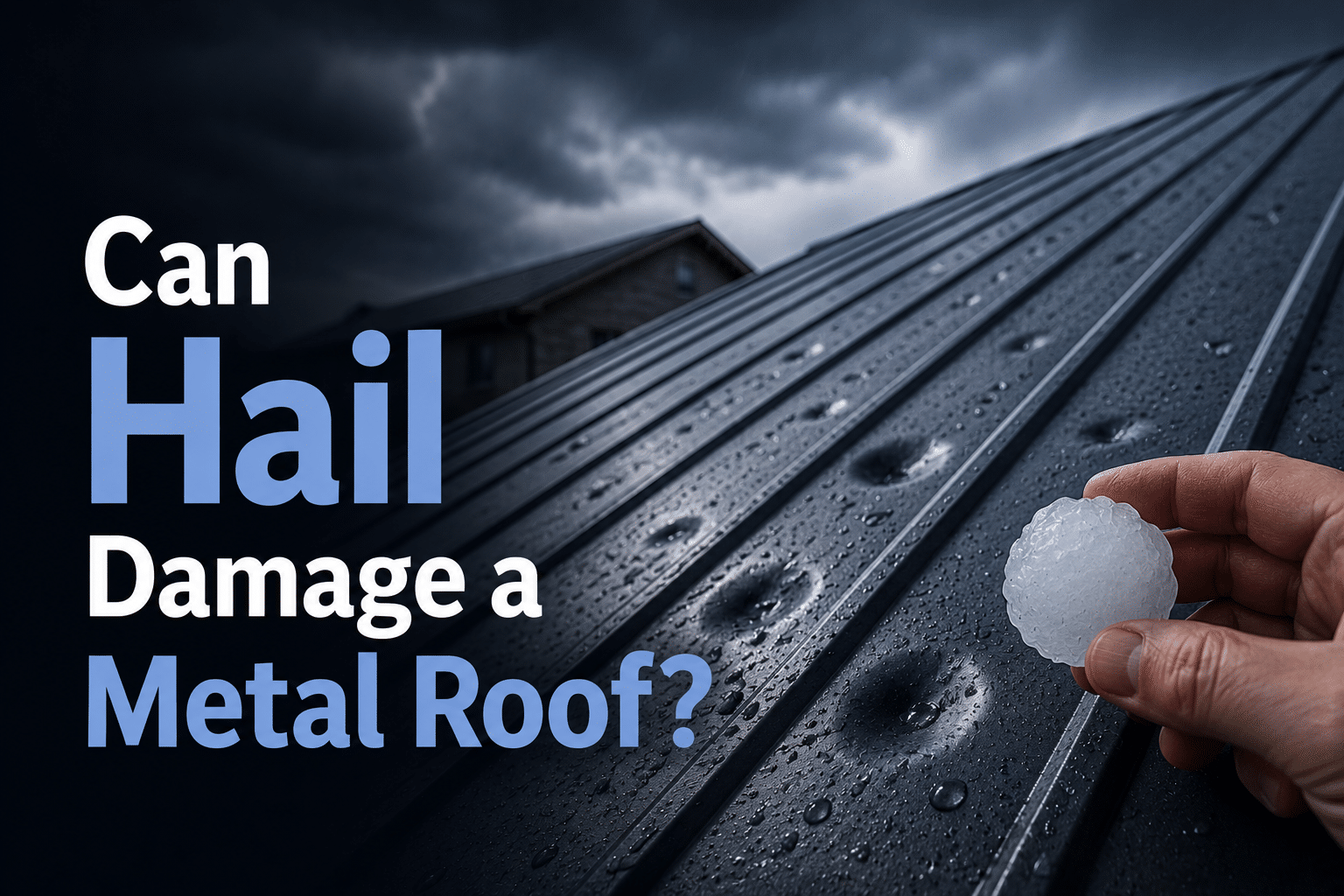
A metal roof is one of the stronger roofing options for storm-prone areas, but that does not mean hail cannot damage it. After a severe storm, many homeowners notice dents, chipped coating, damaged flashing, or new leaks and wonder whether the roof still protects the home properly.
If you are asking can hail damage a metal roof, the short answer is yes. Some metal roofs handle hail very well, while others may show cosmetic or functional damage depending on hail size, wind speed, roof age, panel thickness, and installation quality.
Can Hail Damage a Metal Roof? Quick Answer
Yes, hail can damage a metal roof, especially during strong storms with larger hailstones and high wind. Damage may range from small cosmetic dents to more serious issues like seam damage, punctures, flashing problems, or coating failure.
A common question we hear is whether all hail dents mean the roof needs replacement. In many Florida roofing projects, the answer depends on whether the damage is only cosmetic or if it affects how the roof sheds water and protects the home.
How Hail Damages a Metal Roof
Metal roofs are durable, but hail impacts can still stress the roofing system. The level of damage depends on several factors working together during the storm.
A newer standing seam roof with thicker panels may resist damage better than an older exposed-fastener roof with worn coating or loose fasteners.
Hail size matters
Small hail may leave little or no visible damage. Larger hailstones are more likely to dent panels, crack protective coating, or damage flashing and roof penetrations.
If hail reaches golf-ball size or larger, the risk of more serious damage increases significantly.
Wind speed changes impact force
Wind-driven hail often causes worse damage than hail falling straight down. Strong winds can increase impact force and strike the roof at sharper angles.
This is important in Florida because many hailstorms arrive alongside strong wind and heavy rain.
Roof condition affects the outcome
An older roof may already have weak spots, loose fasteners, rust, or worn coating. Hail can make those issues worse much faster.
That is one reason regular roof inspections are important after major storms.
Types of Hail Damage on a Metal Roof
Not all hail damage looks the same. Some problems affect appearance only, while others affect roof performance and water protection.
Cosmetic damage
Cosmetic damage usually includes:
- shallow dents
- visible dimples
- minor impact marks
- small coating scuffs
The roof may still function normally, but homeowners often dislike the appearance, especially on visible roof sections.
Insurance companies sometimes treat cosmetic damage differently than functional damage, depending on the policy.
Functional damage
Functional damage affects how the roof performs. This may include:
- punctured metal panels
- damaged seams
- loose flashing
- broken fasteners
- coating cracks exposing bare metal
- water intrusion points
Functional damage needs attention quickly because leaks and corrosion can develop over time.
Can a Metal Roof Leak After Hail Damage?
Yes. A metal roof can leak after hail damage, especially if the impact affects seams, flashing, roof penetrations, or fasteners.
Not every dent causes a leak immediately. Sometimes damage weakens the roofing system first, then leaks appear later during the next storm.
Common leak-prone areas
Roofers often check:
- valleys
- ridge caps
- skylight flashing
- vent penetrations
- exposed fasteners
- panel overlaps
- gutter edge areas
These sections usually experience more stress during severe storms.
Why leaks may appear later
Some hail damage weakens sealants or creates tiny cracks that are hard to notice at first. Florida heat, humidity, and repeated rain can slowly worsen those weak points.
If you notice stains on ceilings or walls after a storm, do not wait too long to investigate.
What Size Hail Can Damage a Metal Roof?
The answer depends on the roof system, but many metal roofs start to show dents around 1-inch hail under the right conditions.
Here is a simple breakdown homeowners can use as a general guide:
| Hail Size | Possible Effect on Metal Roof |
| Under 1 inch | Usually minor, but may affect older roofs |
| Around 1 inch | Can dent thinner panels |
| Around 1.5 inches | More likely to damage coating and leave visible dents |
| Around 2 inches | Higher chance of functional damage |
| Over 2 inches | Greater risk of severe roof system damage |
Takeaway:
Large hail creates the highest risk, but wind speed, roof age, panel thickness, and installation quality all affect how much damage actually occurs.
For a deeper breakdown, homeowners can also review how much hail damage to replace a roof.
How Metal Roofs Compare to Shingle Roofs in Hailstorms
Metal roofs often perform better than standard asphalt shingles during hailstorms, but both systems can still suffer damage.
Metal roofing advantages
Metal roofing often offers:
- better impact resistance
- longer lifespan
- stronger wind resistance
- lower chance of granule loss
- improved durability in severe weather
This is one reason many Florida homeowners explore metal roofing for storm-prone areas.
Metal roofs can still dent
Even durable metal panels can dent under strong impact. Softer metals and thinner panels may show damage more easily.
The roof may still work correctly after cosmetic dents, but visible damage can affect appearance and resale concerns.
Signs Your Metal Roof May Have Hail Damage
You do not always need to climb onto the roof to notice signs of hail damage.
Signs visible from the ground
Look for:
- dented gutters or downspouts
- damaged vents
- dented AC units
- chipped paint on metal surfaces
- water stains indoors
- fallen roofing pieces near the home
These clues suggest the storm was strong enough to justify a professional inspection.
Signs roofers often find during inspection
A roofer may check for:
- panel dents
- cracked coating
- seam separation
- flashing damage
- punctures
- loosened fasteners
- water entry points
After severe storms, many homeowners also review what to do after hail, wind, or rain damage to understand the next steps.
Should You Repair or Replace a Hail-Damaged Metal Roof?
That depends on the severity and spread of the damage.
Minor cosmetic dents may not require immediate replacement. Functional damage, active leaks, severe coating failure, or widespread panel damage may make replacement more realistic.
Repair may make sense when
- damage is isolated
- seams remain intact
- there are no active leaks
- coating damage is limited
- panels are still structurally sound
Replacement may make sense when
- damage affects large roof areas
- multiple seams or flashing sections fail
- leaks continue after repair
- panels cannot be matched properly
- the roof is already near the end of its lifespan
If you are unsure which direction makes sense, should I repair or replace my roof can help explain the decision process.
Will Insurance Cover Hail Damage on a Metal Roof?
Insurance may cover hail damage if the policy includes storm-related roof damage, but coverage details vary.
Many insurance claims focus on whether the damage is cosmetic or functional. Some policies limit cosmetic coverage on metal roofs.
What insurance companies may look for
Inspectors often check:
- active leaks
- punctures
- seam damage
- coating failure
- flashing damage
- water intrusion risk
- storm documentation
Good documentation and a professional inspection can help homeowners understand the real condition of the roof.
Florida Weather Makes Storm Damage More Important
Florida roofs face repeated exposure to:
- heat
- humidity
- heavy rain
- strong wind
- seasonal storms
Even smaller hail damage can become a bigger issue when the roof continues to face harsh weather conditions year after year.
Why quick inspections matter
A small weak point today may become a major leak during the next storm season. Fast inspections help catch problems early before water reaches decking, insulation, or interior ceilings.
If the roof is older or already stressed, storm damage may accelerate the need for roof replacement.
FAQ
Can hail dent a metal roof?
Yes. Hail can dent metal roofing panels, especially during storms with larger hailstones or strong wind.
Does hail always damage a metal roof?
No. Some metal roofs handle hail with little visible impact, while others may suffer cosmetic or functional damage.
Can a metal roof leak after hail damage?
Yes. Hail can damage seams, flashing, coating, or fasteners, which may eventually allow water intrusion.
Is cosmetic hail damage a problem?
Cosmetic damage may not affect performance immediately, but it can affect appearance, resale value, and sometimes insurance discussions.
Will insurance cover hail damage to a metal roof?
It depends on the policy and whether the damage is considered cosmetic or functional.
Should I replace my metal roof after hail damage?
Not always. Minor damage may only need repair. Severe or widespread damage may justify replacement.
What should I do after a hailstorm?
Inspect the property safely from the ground, document visible damage, and schedule a professional roof inspection if needed.
Are metal roofs better than shingles during hailstorms?
Metal roofs often perform better overall, but they can still dent or suffer damage depending on storm severity.
Concerned About Hail Damage on Your Metal Roof?
If your roof went through a recent storm, Rhino Roofing Orlando can inspect the damage and explain whether repair or replacement makes more sense. Our team works with metal roofing systems across Orlando and understands how Florida weather affects long-term roof performance. Schedule a roof inspection or contact Rhino Roofing Orlando for a professional evaluation.
Conclusion
So, can hail damage a metal roof? Yes. Even durable metal roofing systems can suffer dents, coating damage, seam stress, flashing issues, or leaks after severe hailstorms.
The level of damage depends on hail size, wind speed, roof condition, panel thickness, and installation quality. Some roofs only experience cosmetic damage, while others develop functional problems that require repair or replacement. A professional inspection remains the best way to understand the real condition of the roof after a storm.