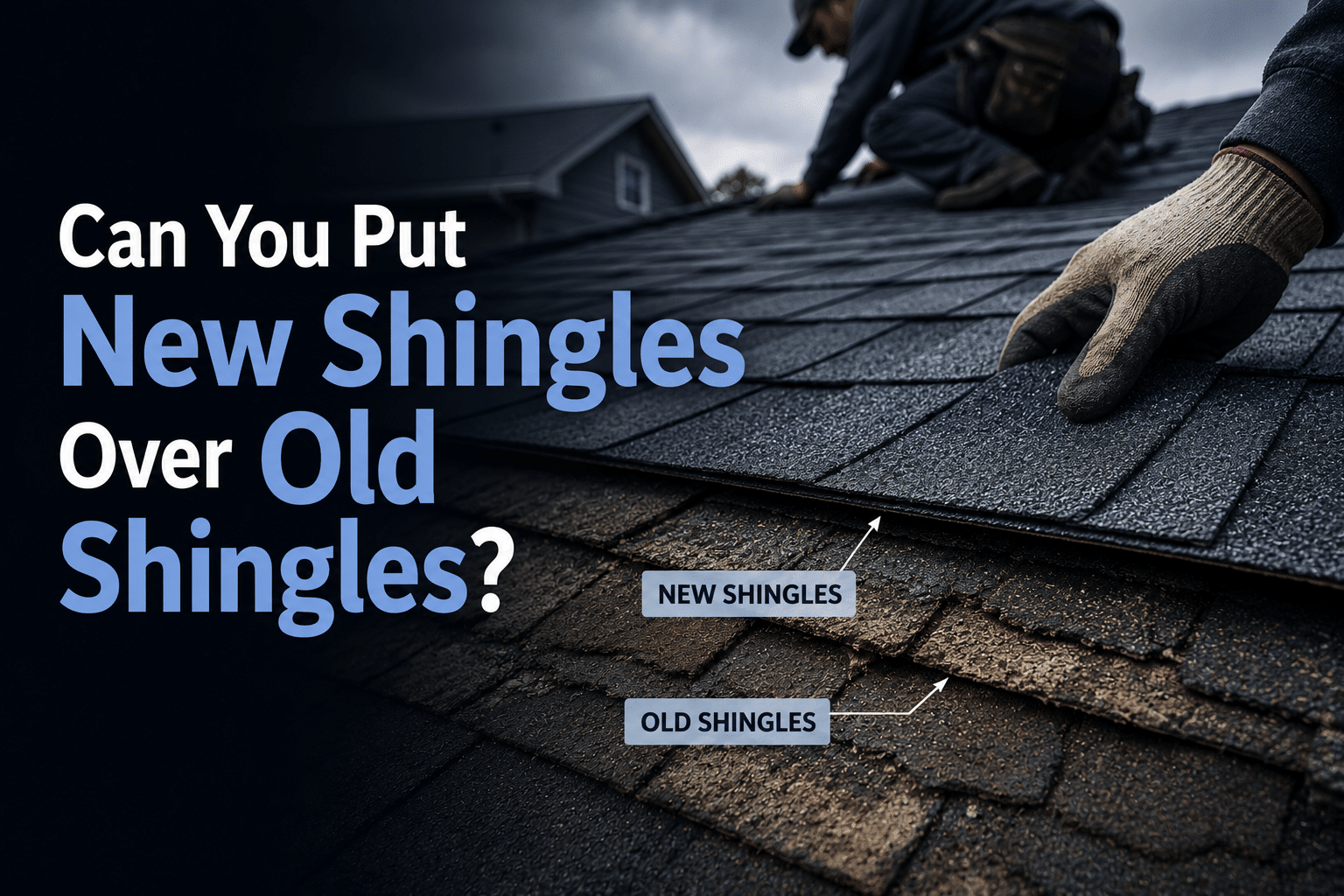
A roof starts to look worn, shingles curl at the edges, and small leaks begin to show up after storms. Many homeowners immediately ask the same question: can new shingles simply go over the old roof instead of tearing everything off?
The answer is sometimes yes, but it is not always the best option. While overlaying shingles can reduce short-term labor costs, it also comes with limitations that many homeowners do not realize until problems appear later.
Can You Put New Shingles Over Old Shingles? Quick Answer
Yes, in some cases you can install new shingles over old shingles, especially if the roof only has one existing layer and the roof decking remains in good condition. This process is often called a roof overlay or reroofing.
As we often explain to homeowners, adding shingles over an old roof is not always the smartest long-term solution. Hidden moisture, damaged decking, poor ventilation, trapped heat, or uneven surfaces can shorten the life of the new roof and create future repair issues.
What Does It Mean to Put New Shingles Over Old Shingles?
Installing shingles over existing shingles means roofers leave the old layer in place instead of tearing the roof down to the decking.
The new shingles go directly on top of the older layer, usually with new underlayment and roofing components added where possible.
This is often called reroofing
Homeowners may hear terms like:
- reroofing
- roof overlay
- shingle overlay
- second-layer shingles
All generally describe the same process.
Florida roofing codes matter
In many Florida roofing projects, local code requirements affect whether overlays are allowed. Some homes may already have multiple roofing layers or structural concerns that prevent another layer from being installed.
That is why a professional roof inspection is important before deciding.
When Can You Put New Shingles Over Old Shingles?
Not every roof qualifies for an overlay.
A roofer usually checks the condition of the shingles, roof decking, flashing, ventilation, and overall roof structure before recommending reroofing.
The roof usually needs only one existing layer
Most roofing codes allow a maximum of two roofing layers. If the roof already has two layers, a full tear-off is normally required.
The decking must still be solid
If moisture has weakened the roof decking underneath, covering the problem with new shingles creates bigger issues later.
A weak deck can lead to sagging, trapped moisture, and shortened roof lifespan.
The old shingles cannot be severely damaged
An overlay works better when the existing roof remains relatively flat and stable.
Major curling, buckling, soft spots, or widespread storm damage usually make a full replacement the safer option.
Pros of Installing New Shingles Over Old Shingles
Some homeowners choose reroofing because it offers short-term savings and faster installation.
Lower upfront cost
Skipping a full tear-off reduces labor and disposal costs.
Without removing old shingles, the project may require fewer work hours and less dumpster waste.
Faster installation process
Because roofers spend less time removing old material, reroofing can move faster than a complete replacement.
For homeowners concerned about project timing, this can seem attractive.
Less disruption around the property
A roof overlay usually creates:
- less debris
- fewer nails around the yard
- less noise duration
- lower cleanup demands
This may help homeowners who want a simpler short-term project.
Risks of Putting New Shingles Over Old Shingles
Although reroofing may save money initially, there are important downsides homeowners should understand.
Hidden roof damage stays underneath
One of the biggest concerns is that roofers cannot fully inspect the decking once old shingles remain in place.
Leaks, moisture damage, mold, or weak decking may stay hidden beneath the new layer.
The new roof may not last as long
Overlay roofs often trap more heat because the second layer reduces ventilation airflow.
Florida heat and humidity can accelerate shingle aging, especially during long summers.
For homeowners comparing roof lifespan expectations, how many years is a roof good for in Florida explains why climate matters so much.
More weight on the roof structure
A second layer adds extra weight to the home.
Most modern homes can handle one overlay, but older homes or weakened roof systems may already have structural stress.
Roof appearance may look uneven
Old shingles sometimes create bumps, dips, or irregular surfaces under the new layer.
That uneven base can affect both appearance and long-term shingle performance.
Roof Overlay vs Full Roof Replacement
Many homeowners struggle between choosing reroofing or full replacement.
Here is a simple comparison that helps explain the difference:
| Roof Overlay | Full Roof Replacement |
| Lower upfront cost | Higher upfront investment |
| Faster installation | Longer project timeline |
| Old shingles remain | Old roof fully removed |
| Hidden problems may stay | Decking fully inspected |
| Shorter potential lifespan | Longer-term durability |
| Adds extra roof weight | Fresh roofing system |
Takeaway:
A roof overlay may work for certain homes, but a full replacement usually provides a cleaner, longer-lasting roofing system.
Homeowners comparing both options often review should I repair or replace my roof before deciding.
Why Florida Weather Changes the Decision
Florida roofs face conditions that stress shingles much harder than milder climates.
Heat accelerates shingle wear
Extreme sun exposure can dry out shingles faster over time. Extra heat trapped between two layers may shorten roof life further.
Storms expose weak spots quickly
Heavy rain, hail, and wind can exploit weak flashing, hidden moisture damage, or uneven roof surfaces.
After severe weather, issues beneath an overlay roof may become harder to diagnose.
For homeowners dealing with storm concerns, what to do after hail, wind, or rain damage explains the inspection process in more detail.
When a Full Roof Replacement Usually Makes More Sense
There are situations where a complete tear-off is usually the smarter investment.
The roof already has leaks
Active leaks often indicate deeper issues beneath the shingles.
Installing another layer over a leaking roof may only delay larger repairs.
The shingles are badly damaged
Major granule loss, curling, storm damage, or soft decking usually point toward replacement instead of overlaying.
The roof is near the end of its lifespan
If the existing roof already aged significantly, covering it with new shingles may not deliver the long-term value homeowners expect.
A complete roof replacement often provides a more reliable solution.
Can You Put Architectural Shingles Over 3-Tab Shingles?
Yes, this sometimes happens during reroofing projects.
Architectural shingles are thicker and often more durable than older 3-tab shingles, but the underlying roof still needs to qualify structurally.
Roof condition still matters
Even if the new shingles are stronger, weak decking or moisture problems underneath remain a concern.
That is why inspections matter more than simply choosing better materials.
Ventilation still affects lifespan
Without proper ventilation, even premium shingles can wear down faster in Florida heat.
Homeowners comparing material options may also benefit from reviewing architectural vs asphalt shingles.
How Roofers Decide Whether an Overlay Is Safe
Professional roofers usually evaluate several factors before recommending reroofing.
Typical inspection checklist
A roofing contractor may check:
- number of existing layers
- decking condition
- flashing condition
- attic ventilation
- sagging areas
- storm damage history
- moisture signs
- roof age
- local code requirements
This helps determine whether reroofing is realistic or risky.
FAQs
Can you put new shingles over old shingles legally in Florida?
In some situations yes, but local building codes and the number of existing roof layers matter.
How many layers of shingles are allowed?
Most roofing codes allow a maximum of two layers.
Is reroofing cheaper than full replacement?
Yes. Reroofing usually costs less upfront because it avoids tear-off labor and disposal costs.
Does a roof overlay last as long as a new roof?
Usually no. Overlay roofs often have a shorter lifespan than complete replacements.
Can roof leaks stay hidden under old shingles?
Yes. Moisture damage or weak decking may remain hidden if old shingles are not removed.
Should I overlay shingles after storm damage?
That depends on the severity of the damage. Severe storm damage often requires a full inspection and possibly replacement.
Do overlays affect home resale value?
Some buyers and inspectors prefer full roof replacements because hidden damage is less likely.
Can you overlay shingles on a metal roof?
Not typically in the same way. Metal roofing systems use different installation methods and materials.
Not Sure Whether Your Roof Needs an Overlay or Full Replacement?
The right answer depends on the condition of the roof underneath the shingles. Rhino Roofing Orlando can inspect your roof, explain whether reroofing makes sense, and help you avoid hidden problems that could cost more later. Schedule a roof inspection or contact Rhino Roofing Orlando for a professional evaluation.
Conclusion
So, can you put new shingles over old shingles? Yes, sometimes you can. A roof overlay may reduce upfront costs and shorten installation time if the roof structure and existing shingles remain in good condition.
However, reroofing also carries risks. Hidden moisture, weak decking, trapped heat, and storm-related damage can shorten roof lifespan and create future repair issues. In many Florida homes, a full roof replacement provides the safer and longer-lasting solution.