A roof leak can make a patch feel like the fastest and cheapest answer. Sometimes it is. But if the roof is older, damaged in several areas, or already patched multiple times, another quick fix may only delay a bigger problem.
That is why many homeowners ask is it better to patch a roof or replace it. The right answer depends on roof age, damage severity, leak history, material condition, and whether the roof still has enough useful life left to justify repair.
Is It Better to Patch a Roof or Replace It? Quick Answer
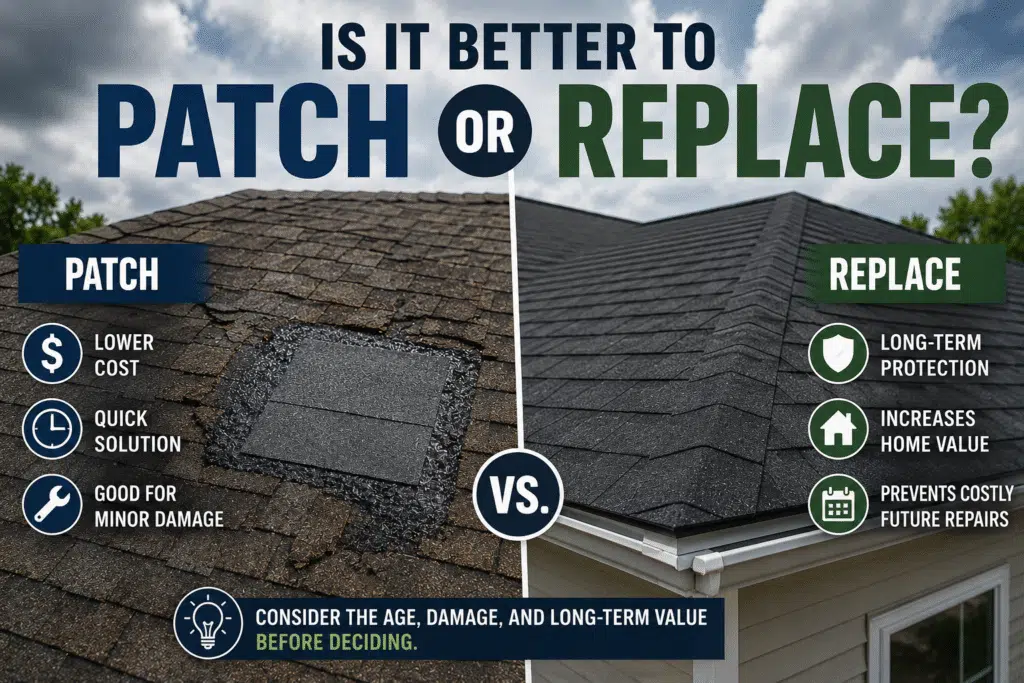
Is it better to patch a roof or replace it? Patching is usually better when the damage is small, isolated, and the rest of the roof is still in good condition. Replacement is usually better when the roof is old, leaking in multiple areas, has widespread shingle damage, or needs repeated repairs.
As we often explain to homeowners, the cheapest option today is not always the lowest-cost option long term. A patch can be smart for a newer roof with one leak. But on an aging Florida roof with storm damage, heat wear, or failing underlayment, replacement may protect the home better and reduce ongoing repair costs.
What Does It Mean to Patch a Roof?
A roof patch is a localized repair. It focuses on one damaged area instead of replacing the entire roofing system.
Patching may involve replacing a few shingles, sealing a small leak, repairing flashing, fixing a vent area, or addressing minor storm damage. It is usually faster and less expensive than replacement.
Common roof patch situations
A roof patch may work when:
- a few shingles are missing
- one flashing area leaks
- a small section was damaged by wind
- a nail pop caused a minor leak
- damage is limited to one roof plane
This type of work often falls under normal roof repair when the roof still has useful life remaining.
What a patch does not solve
A patch does not reset the age of the roof. It also does not fix widespread material failure, old underlayment, poor ventilation, soft decking, or repeated leaks across different areas.
That is why patching should be based on roof condition, not just price.
When Patching a Roof Makes Sense
Patching can be the right choice when the roof is mostly healthy and the problem is clearly limited.
The roof is still relatively new
If your roof is under 10–15 years old and has one small leak or localized damage, patching may be enough.
Newer roofs usually have stronger surrounding materials
The repair holds better when nearby shingles, flashing, underlayment, and decking are still in solid condition.
On a newer roof, a patch can restore protection without replacing materials that still have years of life left.
The damage is isolated
A small problem in one area does not always justify full replacement.
Examples of isolated damage
Patching may work for:
- a few missing shingles
- a small leak around a vent
- minor flashing damage
- one storm-damaged section
- limited damage from a branch impact
In these cases, a professional roof inspection can confirm whether the issue is truly isolated.
The repair cost is reasonable compared to roof age
A patch makes more sense when the repair cost is small and the roof still has meaningful life left.
For example, spending a modest amount to repair a 7-year-old roof can be practical. Spending repeatedly on a 22-year-old roof may not be.
When Roof Replacement Is Usually Better
Replacement becomes the smarter option when patching only treats symptoms instead of solving the real roofing problem.
The roof is near the end of its lifespan
Older roofs often have widespread wear even when only one leak is visible.
Signs age may be the real issue
Look for:
- curling shingles
- heavy granule loss
- brittle shingles
- faded or cracked materials
- repeated leaks
- old underlayment
- soft decking
If the roof is already near the end of its expected life, a patch may only buy a short amount of time.
Leaks keep coming back
One leak can be repaired. Multiple recurring leaks often point to a larger system failure.
Repeated patches can become expensive
If you keep paying for repairs every season, the roof may already be past the point where patching makes financial sense.
Homeowners in this situation often benefit from comparing repair and replacement side by side with should I repair or replace my roof.
Storm damage is widespread
Florida storms can damage more than one visible area.
Wind, hail, and heavy rain may affect shingles, flashing, underlayment, roof edges, and decking at the same time.
A patch may miss hidden damage
After major storm exposure, a small visible leak might only be part of the problem. That is why homeowners often review what to do after hail, wind, or rain damage before deciding how to move forward.
Patch vs Replacement: Simple Comparison
Here is a practical way to compare both options:
| Factor | Roof Patch | Roof Replacement |
| Upfront cost | Lower | Higher |
| Best for | Small isolated damage | Widespread wear or old roofs |
| Timeline | Usually faster | Longer project |
| Long-term value | Good if roof is healthy | Better if roof is failing |
| Leak risk | May return if roof is old | Reduces system-wide risk |
| Appearance | May not match perfectly | Uniform new roof |
| Warranty options | Limited | Stronger coverage potential |
Takeaway:
A patch is best for a specific problem on a healthy roof. Replacement is better when the roof system itself is failing.
Florida Weather Makes This Decision More Important
In Orlando and across Florida, roofs deal with more stress than in many cooler, drier climates.
Heat, humidity, UV exposure, wind-driven rain, and storm seasons can turn small roof weaknesses into larger problems faster.
Heat can shorten shingle life
Florida sun can dry out asphalt shingles and weaken them over time.
If shingles are already brittle, a patch may not hold as well because nearby materials may crack or break during repair.
Rain exposes weak points quickly
A patch may look fine at first, but heavy rain can reveal whether the surrounding roof system is still reliable.
If water keeps finding new paths inside, the issue may be larger than one repair area.
How Roof Age Affects the Patch vs Replace Decision
Roof age matters because repairs work best when the surrounding materials still have strength.
Younger roofs are better repair candidates
A newer roof with isolated damage often responds well to patching.
This is common after minor wind damage, fallen debris, or a small flashing issue.
Older roofs may not hold repairs well
Older shingles can crack during repair. Flashing may be worn. Underlayment may no longer provide strong water protection.
At that point, roof replacement may be the cleaner long-term solution.
What Roofers Check Before Recommending Patch or Replacement
A good roofer should not recommend replacement without checking the full roof. They should also avoid patching blindly if the roof has bigger problems.
Inspection points that matter
Roofers usually check:
- roof age
- leak location
- shingle condition
- granule loss
- flashing condition
- underlayment concerns
- attic moisture
- roof decking
- storm damage
- previous repair areas
This helps determine whether a patch will actually solve the issue.
When a Patch Can Cost More in the Long Run
Patching is not automatically the cheaper option if the roof keeps failing.
Repeated repairs add up
A homeowner may pay for one patch, then another, then another. Over time, those costs can eat into the budget that could have gone toward a proper replacement.
Interior damage can increase the total cost
If a patch does not stop the real leak source, water can damage drywall, insulation, framing, and ceilings.
If you already see interior water signs, how do I fix a leaky roof is a useful supporting resource.
Questions to Ask Before You Decide
Before choosing patch or replacement, ask:
- How old is the roof?
- Is the damage isolated or widespread?
- Has this area leaked before?
- Are shingles brittle, curled, or missing granules?
- Is the decking still solid?
- Will the patch likely last several years?
- Would replacement reduce future repair costs?
- Is storm damage involved?
If the answers point to age, repeat leaks, or widespread damage, replacement may be the better investment.
Need Help Deciding Between a Roof Patch and Replacement?
A quick patch can solve some problems, but it is not always the right long-term answer. Rhino Roofing Orlando can inspect your roof, explain the damage clearly, and help you decide whether repair or replacement makes the most sense. Schedule a roof inspection or contact Rhino Roofing Orlando for honest guidance.
Conclusion
So, is it better to patch a roof or replace it? Patching is better when the damage is small, isolated, and the rest of the roof is still strong. Replacement is better when the roof is old, worn, leaking repeatedly, storm-damaged, or close to the end of its lifespan.
The best decision starts with a real inspection. Once you know whether the issue is localized or system-wide, you can choose the option that protects your home and your budget long term.
FAQ Section
Is it cheaper to patch a roof or replace it?
Patching is cheaper upfront, but replacement may be more cost-effective if the roof is old, failing, or leaking repeatedly.
How long does a roof patch last?
It depends on the repair quality, roof condition, weather exposure, and material age. A patch on a healthy roof can last years, while a patch on an old roof may fail sooner.
Can you patch a roof leak instead of replacing the roof?
Yes, if the leak is isolated and the rest of the roof remains in good condition.
When should you not patch a roof?
Avoid relying on patches when the roof has widespread damage, multiple leaks, soft decking, major granule loss, or is near the end of its lifespan.
Does storm damage require roof replacement?
Not always. Minor storm damage may be repairable, but widespread wind or hail damage may require replacement.
Can patching a roof affect insurance?
It can, depending on the claim, documentation, and whether the repair meets proper roofing standards.
Will a roof patch match the rest of the roof?
Not always. Older shingles fade over time, so new replacement materials may look slightly different.
Should I get a roof inspection before patching?
Yes. An inspection helps confirm whether the problem is isolated or part of a larger roof issue.

Romail Shah is a content strategist and web authority expert who works with Rhino Roofing Orlando’s licensed roofing team to create accurate, trustworthy guides on residential and commercial roofing in Central Florida. His article reflects real expertise and Florida-specific roofing standard