Shingles may be the visible part of a roof, but they are not the only thing protecting a home from water intrusion. Beneath the shingles sits another important layer that many homeowners never see until a roof replacement begins.
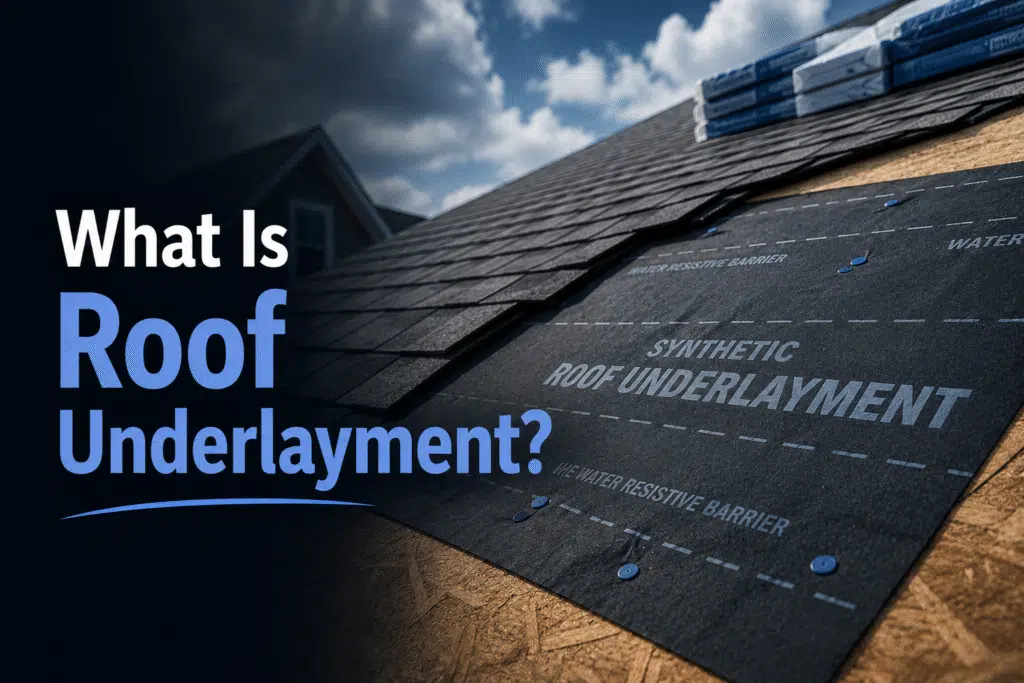
If you are asking what is roof underlayment, it is essentially the protective barrier installed between the roof decking and the roofing material. This layer helps block moisture, supports water resistance, and adds another level of protection during Florida storms and heavy rain.
What Is Roof Underlayment? Quick Answer
Roof underlayment is a protective material installed directly on top of the roof decking and underneath shingles, metal panels, or other roofing materials. Its main purpose is to create a moisture barrier that helps protect the home if water gets beneath the outer roofing layer.
A common question we hear is whether underlayment really matters if shingles already cover the roof. In many Florida roofing projects, underlayment becomes one of the most important defenses against wind-driven rain, storm exposure, and long-term moisture damage.
What Does Roof Underlayment Do?
Roof underlayment acts as a secondary layer of protection.
While shingles or metal panels handle most weather exposure, underlayment helps stop water from reaching the roof decking when the outer roofing system becomes compromised.
It helps prevent moisture intrusion
Strong rain, wind, damaged shingles, or flashing failures can allow water beneath the surface roofing material.
The underlayment helps reduce the chance of water reaching:
- roof decking
- attic insulation
- ceilings
- wall framing
- interior drywall
It adds storm protection
Florida roofs regularly deal with:
- heavy rain
- wind-driven storms
- hurricanes
- humidity
- heat exposure
Good underlayment helps strengthen the overall roofing system during severe weather conditions.
For homeowners concerned about storm durability, roofing materials for Florida weather explains how different roof systems perform in Florida climates.
Where Roof Underlayment Is Installed
Underlayment sits directly above the roof decking.
Roofers install it before shingles, metal roofing, tile roofing, or other roofing materials go on top.
Basic roof layer order
A standard roofing system often includes:
- roof decking
- roof underlayment
- flashing and waterproof details
- shingles or roofing material
Each layer works together to protect the home.
Underlayment covers vulnerable areas
Roofers pay special attention to areas like:
- valleys
- roof edges
- penetrations
- skylights
- vents
- chimneys
These sections often face higher leak risk during storms.
Types of Roof Underlayment
There are several major types of roof underlayment used today.
Felt underlayment
Felt underlayment, sometimes called tar paper, has been used for many years.
It is commonly available in:
- 15-pound felt
- 30-pound felt
Felt is usually more affordable, but it absorbs moisture more easily than newer synthetic products.
Synthetic underlayment
Synthetic underlayment has become much more common on modern roofs.
It is typically:
- lighter
- stronger
- more tear-resistant
- more water-resistant
- better for long exposure periods
Many Florida roofing contractors prefer synthetic underlayment because it handles heat and storms better than traditional felt in many situations.
Self-adhered underlayment
This waterproof membrane sticks directly to the roof decking.
It is often used in:
- valleys
- low-slope sections
- leak-prone areas
- storm-sensitive roof sections
These membranes help protect against water intrusion when wind-driven rain pushes beneath shingles.
Why Roof Underlayment Matters in Florida
Florida weather creates conditions where underlayment becomes especially important.
Wind-driven rain increases leak risk
Heavy storms can push rain sideways under shingles.
Without proper underlayment, water may reach the decking much faster.
Heat stresses roofing systems
Extreme sun exposure can wear roofing materials over time. Strong underlayment adds another layer of defense when shingles age or become damaged.
Storm seasons expose weak spots
Older roofs often develop problems around flashing, penetrations, or roof edges.
After severe weather, many homeowners schedule a roof inspection to check whether underlayment and shingles still protect the home properly.
Does Roof Underlayment Stop Leaks Completely?
Not necessarily.
Underlayment helps reduce leak risk, but it is not meant to function as the primary roofing surface long term.
The outer roofing material still matters most
Shingles, tile, or metal roofing remain the first defense against weather exposure.
If those materials fail, underlayment helps provide temporary protection underneath.
Damaged underlayment can still fail
Over time, underlayment may deteriorate due to:
- age
- trapped moisture
- poor ventilation
- improper installation
- severe storms
That is one reason older roofs sometimes need replacement rather than repeated repairs.
Homeowners comparing options may also benefit from reading should I repair or replace my roof.
Roof Underlayment for Different Roofing Materials
Different roofing systems may use different underlayment approaches.
Asphalt shingle roofs
Shingle roofs commonly use felt or synthetic underlayment beneath the shingles.
The roof pitch and local code requirements often affect the type used.
For homeowners researching shingle systems, what roof pitch is best for shingles explains why slope matters.
Metal roofing systems
Metal roofs often use specialized underlayment because metal expands and contracts with temperature changes.
Moisture control and heat resistance become very important beneath metal panels.
Homeowners exploring metal systems can also review metal roof underlayment is essential.
Tile roofing systems
Tile roofs may use stronger waterproof barriers because water can move beneath tiles more easily during storms.
This is especially important in hurricane-prone regions.
Signs Roof Underlayment May Have Problems
Homeowners usually cannot see underlayment directly, but certain warning signs may suggest problems underneath the roof surface.
Possible warning signs include
- recurring leaks
- ceiling stains
- attic moisture
- mold smell
- soft roof decking
- water around vents or skylights
- storm-related roof damage
Roof age also matters
Older roofs may have aging underlayment even if shingles still appear acceptable from the ground.
That is why inspections matter before deciding on repairs or overlays.
For broader lifespan guidance, homeowners often review roofs lifespan tips and maintenance guide.
Can Roof Underlayment Be Reused During Roof Replacement?
Usually no.
During a full roof replacement, roofers normally remove the old roofing system down to the decking and install new underlayment.
New roofing systems need fresh protection
Old underlayment may already contain:
- nail holes
- moisture wear
- heat deterioration
- weakened waterproofing
Installing fresh underlayment helps support the lifespan of the new roof.
Roof Underlayment vs Roof Decking
Homeowners sometimes confuse these two components.
Here is a simple comparison:
| Roof Decking | Roof Underlayment |
| Structural wood surface | Protective moisture barrier |
| Supports the roofing system | Protects decking from water |
| Usually plywood or OSB | Felt, synthetic, or waterproof membrane |
| Attached to roof framing | Installed above decking |
Takeaway:
The decking supports the roof structure, while the underlayment protects the decking from moisture intrusion.
For deeper structural understanding, homeowners may also review a complete guide to understanding roof decking.
FAQs
What is roof underlayment used for?
Roof underlayment helps protect the roof decking from moisture and water intrusion beneath the roofing material.
Is roof underlayment waterproof?
Some underlayments are highly water-resistant, while self-adhered membranes offer stronger waterproof protection.
Do all roofs need underlayment?
Yes. Most roofing systems require some type of underlayment beneath the outer roofing material.
What type of roof underlayment is best?
That depends on the roofing material, roof pitch, climate, and local code requirements.
How long does roof underlayment last?
Its lifespan varies based on material type, roof conditions, ventilation, and weather exposure.
Can damaged underlayment cause leaks?
Yes. If underlayment deteriorates or fails, moisture may reach the decking and interior areas.
Is synthetic underlayment better than felt?
Synthetic products are often stronger and more water-resistant, especially in harsh climates like Florida.
Do metal roofs need underlayment?
Yes. Metal roofing systems still require proper underlayment for moisture control and protection.
Need a Professional Roof Inspection or Roof Replacement?
Roof underlayment plays a major role in protecting your home, especially during Florida storms and heavy rain seasons. Rhino Roofing Orlando can inspect your roofing system, identify hidden moisture concerns, and recommend the right roofing solution for your property. Schedule a roof inspection or contact Rhino Roofing Orlando for professional guidance.
Conclusion
So, what is roof underlayment? It is the protective layer installed between the roof decking and the outer roofing material that helps guard against moisture intrusion and storm-related water damage.
While homeowners rarely see it, underlayment plays a major role in roof durability, leak prevention, and long-term roof performance. In Florida’s climate, choosing the right underlayment and installing it correctly can make a significant difference in how well a roof handles heat, storms, and heavy rain over time.

Romail Shah is a content strategist and web authority expert who works with Rhino Roofing Orlando’s licensed roofing team to create accurate, trustworthy guides on residential and commercial roofing in Central Florida. His article reflects real expertise and Florida-specific roofing standard