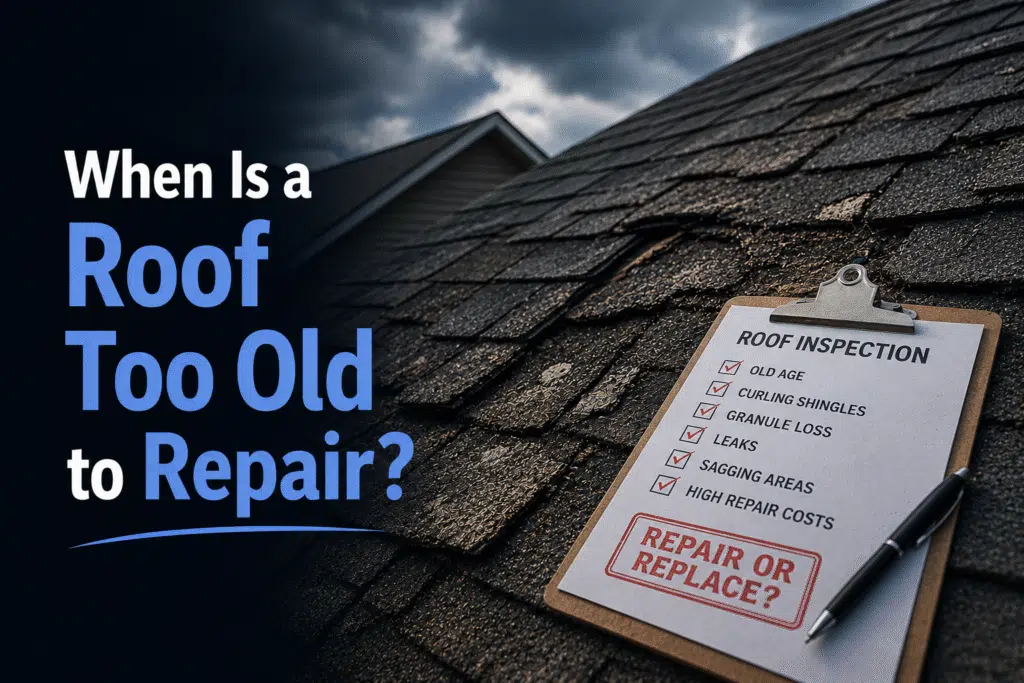
A small leak or a few missing shingles might seem like an easy repair until a roofer mentions the roof may be too old to fix properly. That is where many homeowners start asking the same question: when is a roof too old to repair?
The answer depends on more than age alone. Roof condition, storm exposure, previous repairs, ventilation, and Florida weather all play a role in whether repairs still make financial sense or if replacement becomes the smarter long-term option.
When Is a Roof Too Old to Repair? Quick Answer
A roof is usually considered too old to repair when the damage is widespread, the roofing material has reached the end of its expected lifespan, or repeated repairs no longer solve the underlying problem.
As we often explain to homeowners, repairs make sense when the issue is isolated and the roof still has useful life remaining. However, older roofs with recurring leaks, storm damage, missing shingles, soft decking, or major granule loss often cost more to maintain over time than replacing the roof entirely.
How Long Does a Roof Usually Last?
Roof lifespan depends heavily on the material, installation quality, ventilation, and weather exposure.
Florida roofs often age faster than roofs in milder climates because of:
- heat
- humidity
- UV exposure
- tropical storms
- heavy rain
- wind damage
Average roof lifespan by material
Here is a general overview homeowners can use:
| Roofing Material | Average Lifespan |
| 3-tab asphalt shingles | 15–20 years |
| Architectural shingles | 20–30 years |
| Metal roofing | 40–70 years |
| Tile roofing | 40–50+ years |
| Flat roofing systems | 15–30 years |
Takeaway:
A roof nearing the upper end of its expected lifespan deserves closer evaluation before investing in major repairs.
Homeowners comparing lifespan expectations often review how many years is a roof good for in Florida.
Signs a Roof May Be Too Old to Repair
Age alone does not automatically mean replacement is necessary.
However, several warning signs suggest repairs may no longer be cost-effective.
Multiple leaks across the roof
One isolated leak is often repairable.
But when leaks start appearing in multiple areas, the roof system itself may already be failing.
Recurring leaks after previous repairs
If the same roof area keeps leaking after repairs, there may be deeper issues such as:
- worn underlayment
- deteriorated decking
- flashing failure
- aging shingles throughout the roof
In these situations, patchwork repairs often become temporary fixes instead of long-term solutions.
Heavy shingle deterioration
Shingles protect the roofing system from water and UV damage.
Once shingles become severely worn, repairs may not hold properly.
Common shingle failure signs
Look for:
- curling shingles
- cracking
- missing shingles
- bald spots
- granule loss
- brittle texture
Homeowners dealing with aging shingles often review why are granules coming off my shingles to better understand roof wear.
Storm damage on an already old roof
Florida storms can push an aging roof past the point where repair is practical.
Wind and hail often expose weak areas
Older roofs typically struggle more during severe weather because materials lose flexibility and strength over time.
Storm damage may include:
- lifted shingles
- punctures
- flashing damage
- roof leaks
- exposed decking
After severe weather, many homeowners schedule a roof inspection after a hailstorm to evaluate the roof properly.
Roof decking problems
Sometimes the issue extends below the shingles.
Soft or rotted decking
If water damage reaches the decking underneath, repairs become more complicated and expensive.
A roofer may discover:
- soft spots
- wood rot
- moisture damage
- sagging areas
This often changes the recommendation from simple repair to replacement.
For homeowners unfamiliar with decking issues, a complete guide to understanding roof decking explains the role it plays in roof performance.
When Repairs Still Make Sense
Not every older roof needs replacement immediately.
Some situations still justify repair work.
The damage is isolated
Repairs may still work well if:
- most shingles remain in good condition
- the roof has no structural damage
- leaks are limited to one area
- the roof still has several years of life left
The roof is relatively newer
A roof under 10–15 years old with localized damage often remains a strong repair candidate.
This is especially true after minor storm damage or flashing issues.
When Replacement Usually Makes More Sense
There comes a point where repeated repairs stop being financially practical.
Repair costs keep adding up
If homeowners pay for repairs every year, replacement often becomes more cost-effective long term.
Frequent repairs can hide bigger issues
Older roofs sometimes develop hidden moisture problems beneath the shingles.
Constant patch repairs may delay but not solve the problem.
Homeowners weighing both options often review should I repair or replace my roof.
Insurance limitations on older roofs
Insurance companies sometimes limit coverage on aging roofs.
Older roofs may qualify for partial coverage only
Depending on age and condition, insurance providers may:
- reduce claim payouts
- require replacement after storm damage
- deny cosmetic-only damage claims
- request proof of roof condition
This becomes especially important in Florida where storms are common.
Florida Climate Makes Roof Aging Faster
Florida roofing systems face harsher conditions than many other states.
Heat speeds up shingle deterioration
Constant UV exposure dries shingles out faster.
Older roofs become brittle and more vulnerable to cracking.
Storm season increases wear
Heavy rain and strong winds repeatedly stress roofing materials.
Over time, even quality roofs begin showing signs of fatigue.
Homeowners concerned about long-term roof performance often review roofing materials for Florida weather.
Questions Homeowners Should Ask Before Choosing Repair or Replacement
Before deciding, homeowners should consider:
- How old is the roof?
- How many repairs has it already had?
- Is the damage localized or widespread?
- Are leaks becoming more frequent?
- Is the decking still solid?
- Will repairs realistically extend roof life?
- Would replacement lower future repair costs?
A professional roof inspection usually provides the clearest answer.
What Roofers Look for During Inspection
Roof inspections go beyond visible shingles.
Roofers typically evaluate:
- roof age
- shingle condition
- flashing performance
- underlayment condition
- ventilation
- storm damage
- attic moisture
- decking stability
- repair history
This helps determine whether repairs are still practical or if replacement would provide better long-term value.
Homeowners preparing for inspections may also benefit from reviewing the roof inspection checklist.
Repair vs Replacement Comparison
Here is a simple homeowner-focused breakdown of when roof repair versus replacement makes the most sense. Repairs may work well for minor isolated leaks or when the roof is still under 15 years old.
However, replacement is often the better option when there is widespread shingle wear, multiple recurring leaks, soft decking, or heavy storm damage. In some storm-related cases, repairs may help temporarily, but severe damage frequently leads to the need for a full replacement. Additionally, if repair costs continue repeating year after year, replacing the roof usually becomes the smarter long-term investment.
The key takeaway is that if repairs only delay larger problems for a short time, a full replacement often provides better value and peace of mind.
FAQs
When is a roof too old to repair in Florida?
Many asphalt shingle roofs become difficult to repair effectively after 20–25 years, especially with storm exposure and heat damage.
Can a 20-year-old roof still be repaired?
Yes, if the damage is isolated and the rest of the roof remains in good condition.
How do I know if my roof needs replacement instead of repair?
Recurring leaks, widespread shingle deterioration, soft decking, and repeated repairs are common signs replacement may be better.
Will insurance replace an old roof?
It depends on the policy, roof condition, and cause of damage. Storm-related damage is more likely to qualify than normal aging.
Can missing shingles on an old roof be repaired?
Sometimes. However, matching older shingles and maintaining long-term durability may become difficult.
Does Florida weather shorten roof lifespan?
Yes. Heat, UV exposure, storms, humidity, and wind can accelerate roof aging in Florida.
How long does a roof inspection take?
Most residential roof inspections take between 30 minutes and a few hours depending on roof size and condition.
Should I replace my roof before selling my home?
In some cases, yes. An aging roof can affect inspections, buyer negotiations, and insurance approvals.
Not Sure if Your Roof Is Too Old to Repair?
An aging roof does not always mean immediate replacement, but recurring problems should not be ignored. Rhino Roofing Orlando can inspect your roof, explain the condition clearly, and help you decide whether repair or replacement makes the most financial sense. Schedule a roof inspection or contact Rhino Roofing Orlando for expert guidance.
Conclusion
So, when is a roof too old to repair? Usually when the roofing system has widespread wear, repeated leaks, storm damage, structural concerns, or has reached the end of its expected lifespan.
Minor repairs can still make sense on roofs with remaining life left. But once repairs become frequent and costly, replacement often provides better protection, better long-term value, and fewer future headaches for Florida homeowners.

Romail Shah is a content strategist and web authority expert who works with Rhino Roofing Orlando’s licensed roofing team to create accurate, trustworthy guides on residential and commercial roofing in Central Florida. His article reflects real expertise and Florida-specific roofing standard