Not every roof slope works the same with shingles. Some roofs shed water quickly and help shingles last longer, while others hold moisture, trap debris, and increase the chance of leaks during Florida storms.
Homeowners often ask what roof pitch is best for shingles when planning a roof replacement, new construction project, or major renovation. The answer depends on drainage, roofing material, weather exposure, and how steep the roof actually is.
What Roof Pitch Is Best for Shingles? Quick Answer
For most homes, a roof pitch between 4/12 and 9/12 works very well with asphalt shingles. This range provides solid water drainage, good durability, and reliable performance during heavy rain and storms.
A common question we hear is whether shingles can work on lower-slope roofs. In many Florida roofing projects, shingles may still work on lower pitches like 2/12 or 3/12, but those roofs usually require additional underlayment protection and careful installation methods.
What Does Roof Pitch Mean?
Roof pitch describes how steep a roof is.
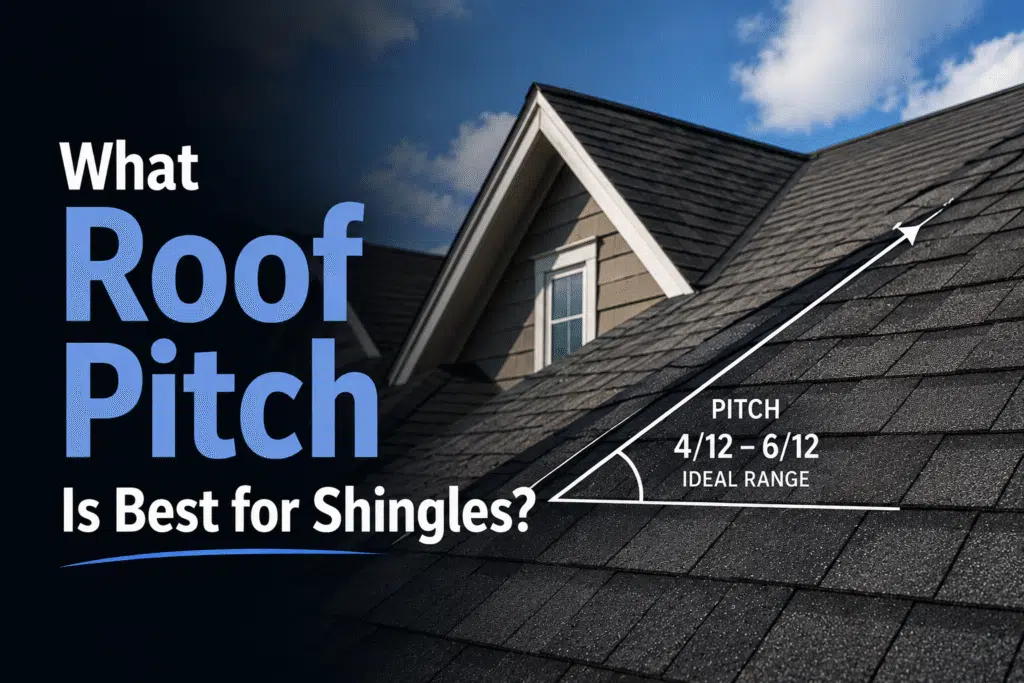
The pitch compares vertical rise to horizontal distance. For example, a 4/12 pitch means the roof rises 4 inches for every 12 horizontal inches.
Why pitch matters for shingles
Shingles rely on gravity to move water off the roof.
If the slope is too low, rainwater drains more slowly. That increases the risk of:
- water intrusion
- trapped debris
- moisture buildup
- underlayment stress
- algae growth
This becomes even more important in Florida because roofs regularly face heavy rain and strong storms.
Steeper roofs drain water faster
A steeper roof usually sheds water more efficiently and reduces standing moisture problems.
That can help improve shingle lifespan over time.
Best Roof Pitch Range for Asphalt Shingles
Most asphalt shingle manufacturers prefer moderate roof slopes.
4/12 to 6/12 is often considered ideal
This range usually balances:
- strong water drainage
- easier installation
- safer maintenance access
- good long-term shingle performance
Many residential homes use this slope because it works well in different climates.
6/12 to 9/12 also performs very well
Steeper roofs often handle water runoff even better.
However, installation becomes more labor-intensive because roofers need extra safety equipment and slower working conditions.
Homeowners comparing materials sometimes also review roofing materials for Florida weather before choosing a roof system.
Can Shingles Be Installed on a Low-Slope Roof?
Yes, but there are limitations.
2/12 is usually the minimum pitch
Many building codes and manufacturers allow shingles on roofs as low as 2/12, but only when special installation requirements are followed.
This often includes:
- ice and water shield protection
- double underlayment layers
- special flashing details
- precise installation practices
Very low slopes increase leak risk
Low-pitch roofs move water more slowly.
During heavy Florida rain, water may back up under shingles if the roofing system is not installed properly.
That is one reason some homeowners choose flat roof systems instead of shingles for very low slopes.
Why Roof Pitch Matters in Florida
Florida weather creates extra pressure on roofing systems.
Heavy rain tests roof drainage
A roof that drains slowly faces more standing water exposure during storms.
Over time, this can stress shingles, flashing, and underlayment.
Wind-driven rain changes everything
Florida storms often combine strong wind with heavy rain.
Water can push sideways under shingles on lower slopes more easily than on steeper roofs.
Heat and humidity affect roof lifespan
Florida heat accelerates roof aging. If moisture remains trapped longer on shallow roofs, shingles may deteriorate faster.
Homeowners concerned about long-term performance often explore how many years is a roof good for in Florida.
Roof Pitch and Different Shingle Types
Not all shingles perform exactly the same.
Architectural shingles
Architectural shingles are thicker and more durable than standard 3-tab shingles.
They generally perform better in storm-prone areas and are common across Florida homes.
3-tab shingles
Traditional 3-tab shingles can still work well, but they may have lower wind resistance compared to architectural products.
Homeowners comparing styles may also benefit from reading architectural vs asphalt shingles.
Steep Roofs vs Low Roofs for Shingles
Each roof slope has pros and cons.
Here is a simple comparison homeowners can use:
| Roof Pitch | Advantages | Challenges |
| Low slope (2/12–3/12) | Lower material visibility, modern appearance | Higher leak risk, slower drainage |
| Medium slope (4/12–6/12) | Strong drainage, ideal for shingles | Standard maintenance needs |
| Steep slope (7/12+) | Excellent water runoff, strong appearance | Harder installation and repairs |
Takeaway:
Most shingle roofing systems perform best on moderate slopes that allow strong drainage without creating difficult installation conditions.
When Roof Pitch Affects Roof Replacement Cost
Roof pitch directly affects labor and installation complexity.
Steeper roofs cost more to install
A steep roof often requires:
- extra safety harnesses
- roof jacks
- slower movement
- more labor time
- additional setup equipment
This can increase overall roof replacement cost.
Low slopes may require additional waterproofing
Lower-pitch roofs may need upgraded underlayment systems and more waterproof protection.
That can also increase project cost.
Homeowners planning financially often review cost of roof replacement in 2025 for broader pricing guidance.
How Roofers Measure Roof Pitch
Roof pitch can be measured from inside the attic or directly on the roof surface.
Common measurement methods
Roofers often use:
- framing squares
- digital pitch gauges
- pitch finder apps
- tape measurements
- drone roof inspections
For homeowners curious about measurements, how to measure my roof for shingles explains the process in more detail.
Signs Your Roof Pitch May Need Special Attention
Certain roofs require extra evaluation before shingles are installed.
Warning signs include
- ponding water
- recurring leaks
- algae growth
- slow drainage
- uneven roof sections
- sagging areas
- repeated storm damage
These issues may indicate the slope or roofing system needs closer inspection.
Inspection matters before reroofing
A professional roof inspection helps identify whether shingles are appropriate for the roof’s slope and condition.
FAQs
What roof pitch is best for shingles?
Most asphalt shingles perform very well on roof pitches between 4/12 and 9/12.
Can shingles go on a 2/12 roof pitch?
Yes, but special underlayment and installation methods are usually required.
What roof pitch is too low for shingles?
Below 2/12 is generally considered too low for standard asphalt shingles.
Do steeper roofs last longer?
Often yes, because steeper slopes drain water faster and reduce standing moisture exposure.
Are shingles good for Florida weather?
Yes. Architectural asphalt shingles are commonly used across Florida when installed correctly.
Does roof pitch affect roof replacement cost?
Yes. Steeper roofs usually increase labor costs and installation complexity.
Can a low-slope roof leak more easily?
Yes. Water drains more slowly on low slopes, increasing leak risk if installation is poor.
What roofing material works best for very low slopes?
Flat roofing systems or specialized low-slope roofing materials often work better than shingles on extremely shallow roofs.
Need Help Choosing the Right Roof System for Your Home?
The best roof pitch for shingles depends on your home’s design, drainage needs, and Florida weather exposure. Rhino Roofing Orlando can inspect your roof, explain your options, and help you choose a roofing system that fits your property properly. Schedule a roof inspection or contact Rhino Roofing Orlando for professional guidance.
Conclusion
So, what roof pitch is best for shingles? In most cases, moderate slopes between 4/12 and 9/12 provide the best balance of drainage, durability, and long-term performance.
Lower slopes can still use shingles in some situations, but they often require additional waterproofing and careful installation. Because Florida weather puts extra stress on roofing systems, choosing the right roof pitch and material combination matters more than many homeowners realize.

Romail Shah is a content strategist and web authority expert who works with Rhino Roofing Orlando’s licensed roofing team to create accurate, trustworthy guides on residential and commercial roofing in Central Florida. His article reflects real expertise and Florida-specific roofing standard