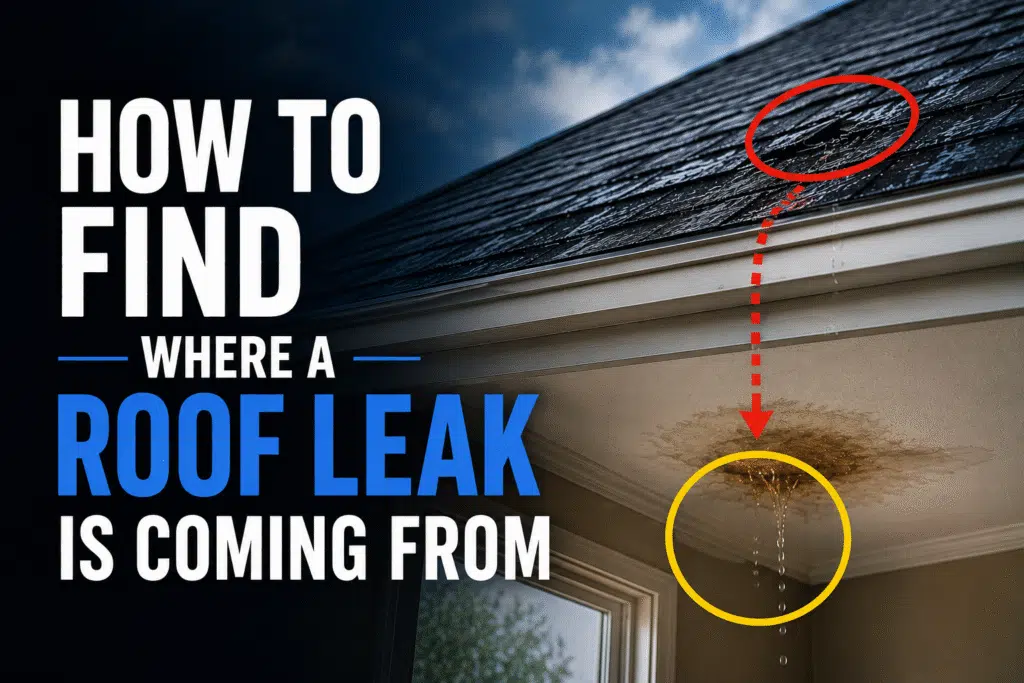
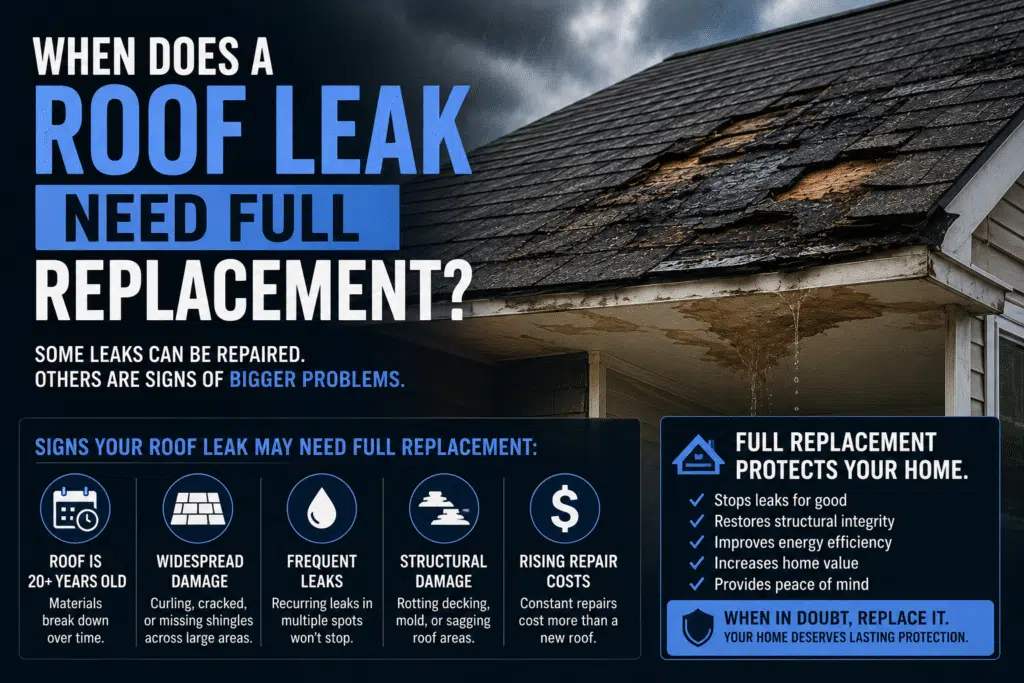
A roof leak does not always mean the entire roof needs to be replaced. Sometimes the problem is a small flashing issue, a few missing shingles, or a damaged vent boot. But in other cases, a leak is only the first visible sign of a much bigger roofing problem.
Homeowners often ask when does a roof leak need full replacement because they want to avoid overspending, but also do not want to keep paying for repairs that fail again later. The right answer depends on the roof’s age, damage pattern, material condition, underlayment, decking, and how often leaks keep returning.
When Does a Roof Leak Need Full Replacement? Quick Answer
A roof leak may need full replacement when the roof is old, leaking in multiple areas, has widespread shingle damage, has soft or rotted decking, or has already been repaired several times without solving the problem.
As we often explain to homeowners, one isolated leak on a newer roof may only need repair. But repeated leaks, storm damage, heavy granule loss, sagging areas, or water damage across multiple sections usually mean the roofing system is failing, not just one small spot.
Does One Roof Leak Mean You Need a New Roof?
Not always.
One roof leak can often be repaired if the rest of the roof is still in good condition. Many leaks come from small problem areas that can be fixed without replacing the entire roofing system.
Common repairable roof leak causes
A roof leak may only need repair when it comes from:
- a cracked pipe boot
- loose flashing
- a few missing shingles
- a small puncture
- one damaged roof valley
- a skylight flashing issue
- minor storm damage in one area
In these cases, professional roof repair may be enough to stop the leak and restore protection.
When a leak becomes more serious
A leak becomes more concerning when it keeps returning, appears in different areas, or shows signs of deeper water damage beneath the roofing material.
That is when replacement becomes part of the conversation.
Signs a Roof Leak May Need Full Replacement
Some warning signs suggest the roof is no longer a good candidate for patching or minor repairs.
The Roof Has Multiple Leaks
One leak can be isolated. Multiple leaks usually mean the roof system is weakening.
Leaks in different rooms are a red flag
If water stains appear in several rooms or different ceiling areas, the issue may not be limited to one small defect.
This may point to:
- failing shingles
- worn underlayment
- widespread flashing issues
- storm damage
- deteriorated roof decking
A full roof inspection can help determine whether the leaks are connected to larger roof failure.
The Roof Is Near the End of Its Lifespan
Roof age matters a lot.
A leak on a 7-year-old roof is very different from a leak on a 22-year-old asphalt shingle roof.
Older roofs are harder to repair long term
As roofs age, materials become weaker. Shingles dry out, underlayment deteriorates, flashing loosens, and sealants break down.
In Florida, heat, humidity, UV exposure, and storm seasons can speed up this aging process.
Homeowners unsure about lifespan can review how many years is a roof good for in Florida.
The Leak Keeps Coming Back After Repairs
Recurring leaks are one of the clearest signs that the roof may need replacement.
Repeated repairs may only treat symptoms
If the same section keeps leaking after repair, the real issue may be deeper than the visible damage.
Possible causes include:
- damaged underlayment
- hidden decking rot
- poor installation
- widespread shingle failure
- ventilation problems
- flashing system failure
At that point, another patch may only delay the inevitable.
Homeowners comparing options often review should I repair or replace my roof.
The Roof Has Widespread Shingle Damage
A leak combined with visible shingle deterioration often points toward a larger problem.
Common shingle warning signs
Look for:
- curling shingles
- cracked shingles
- missing shingles
- bald spots
- heavy granule loss
- lifted edges
- brittle shingle sections
When these signs appear across the roof, repairs may not hold well.
For homeowners noticing roof wear, why are granules coming off my shingles explains one of the most common warning signs.
The Roof Decking Is Soft or Rotted
Roof decking is the structural surface beneath the shingles and underlayment.
Once water reaches the decking, the problem becomes more serious.
Decking damage may require larger work
Soft or rotted decking can lead to:
- sagging roof areas
- mold growth
- attic moisture
- weakened roof structure
- repeated leaks
If decking damage is widespread, full replacement is often the better option because the roof needs to be stripped down and rebuilt properly.
Homeowners can learn more from a complete guide to understanding roof decking.
Storm Damage Covers a Large Area
Florida storms can create leaks that look small indoors but involve much larger damage outside.
Wind and hail can weaken the roof system
After a major storm, damage may include:
- lifted shingles
- missing shingles
- damaged flashing
- hail impact marks
- torn underlayment
- exposed roof decking
- damaged roof vents
If storm damage affects multiple slopes, full replacement may be more practical than repairing one section at a time.
Homeowners dealing with severe weather should review what to do after hail, wind, or rain damage.
When Roof Leak Repair May Still Be Enough?
Not every leak needs full replacement.
A repair may still make sense when the roof is newer, the damage is isolated, and the surrounding materials are still strong.
Repair may be enough when
- the leak is limited to one small area
- the roof is not near the end of its lifespan
- shingles around the leak are still healthy
- decking is solid
- there is no major storm damage
- the roof has not needed repeated repairs
In these situations, targeted repair can be a smart and affordable solution.
When Full Roof Replacement Is Usually Better?
Replacement becomes the stronger option when the roofing system is failing as a whole.
Full replacement may be better when
- leaks appear in multiple areas
- repairs no longer last
- the roof is old
- shingles are brittle or curling
- underlayment is failing
- roof decking is damaged
- storm damage is widespread
- repair costs keep adding up
In these cases, roof replacement may provide better long-term protection than continuing to patch weak areas.
Roof Leak Repair vs Full Replacement
Here is a simple comparison:
| Situation | Repair May Work | Full Replacement May Be Better |
| One isolated leak | ✔ | |
| Newer roof | ✔ | |
| Damaged vent boot or flashing | ✔ | |
| Multiple leaks | ✔ | |
| Old roof near lifespan end | ✔ | |
| Widespread shingle damage | ✔ | |
| Soft or rotted decking | ✔ | |
| Repeated failed repairs | ✔ |
Takeaway:
A leak needs full replacement when it is part of a larger roof failure, not just one small damaged area.
Why Florida Roof Leaks Should Not Be Ignored
Florida weather can make roof leaks worse quickly.
Heavy rain increases water intrusion risk
Even a small leak can spread during repeated rainstorms.
Water may damage:
- attic insulation
- drywall
- ceiling materials
- wood framing
- electrical areas
Humidity can worsen hidden moisture damage
Florida humidity makes trapped moisture more concerning. A leak that seems minor may lead to mold or wood rot if ignored.
For leak basics, homeowners can also review how do I fix a leaky roof.
What a Roofer Checks Before Recommending Replacement
A professional roofer should inspect more than the leak spot.
Inspection usually includes
- roof age
- leak location
- shingle condition
- flashing condition
- attic moisture
- roof decking
- underlayment condition
- storm damage
- ventilation
- previous repair history
This helps determine whether the leak is isolated or part of a roof-wide issue.
Homeowners preparing for an evaluation may review the roof inspection checklist.
Not Sure If Your Roof Leak Needs Repair or Replacement?
A roof leak can be simple, or it can be the first sign of a failing roof system. Rhino Roofing Orlando can inspect the leak, check the roof condition, and explain whether repair or full replacement makes more sense. Schedule a roof inspection or contact Rhino Roofing Orlando for honest roofing guidance.
Conclusion
So, when does a roof leak need full replacement? Usually when the leak is part of a larger pattern, such as multiple leaks, repeated failed repairs, old shingles, damaged underlayment, soft decking, or widespread storm damage.
A small isolated leak may only need repair. But if the roof is aging, leaking repeatedly, or showing damage across multiple areas, full replacement often provides better protection and long-term value for Florida homeowners.
FAQ Section
Does a roof leak always mean replacement?
No. Many roof leaks can be repaired if the damage is isolated and the roof is still in good condition.
When does a roof leak need full replacement?
A roof leak may need full replacement when the roof is old, leaking in multiple areas, has widespread material damage, or has soft decking underneath.
Can repeated roof leaks be repaired?
Sometimes, but repeated leaks often suggest a larger roofing system problem that may require replacement.
Should I replace my roof if it leaks after every storm?
Possibly. Leaks after every storm usually mean the roof needs a full inspection to check for widespread failure.
Can a leaking roof cause decking damage?
Yes. If water gets beneath the underlayment, it can damage the roof decking and lead to rot or soft spots.
Is it cheaper to repair or replace a leaking roof?
Repair is cheaper upfront, but replacement may be more cost-effective if repairs keep failing or the roof is near the end of its lifespan.
Can insurance cover a leaking roof replacement?
It depends on the cause of the leak and the policy. Sudden storm damage may be covered, while age-related wear often is not.
How fast should I fix a roof leak?
As soon as possible. Florida rain and humidity can turn a small leak into major interior damage quickly.

Romail Shah is a content strategist and web authority expert who works with Rhino Roofing Orlando’s licensed roofing team to create accurate, trustworthy guides on residential and commercial roofing in Central Florida. His article reflects real expertise and Florida-specific roofing standard