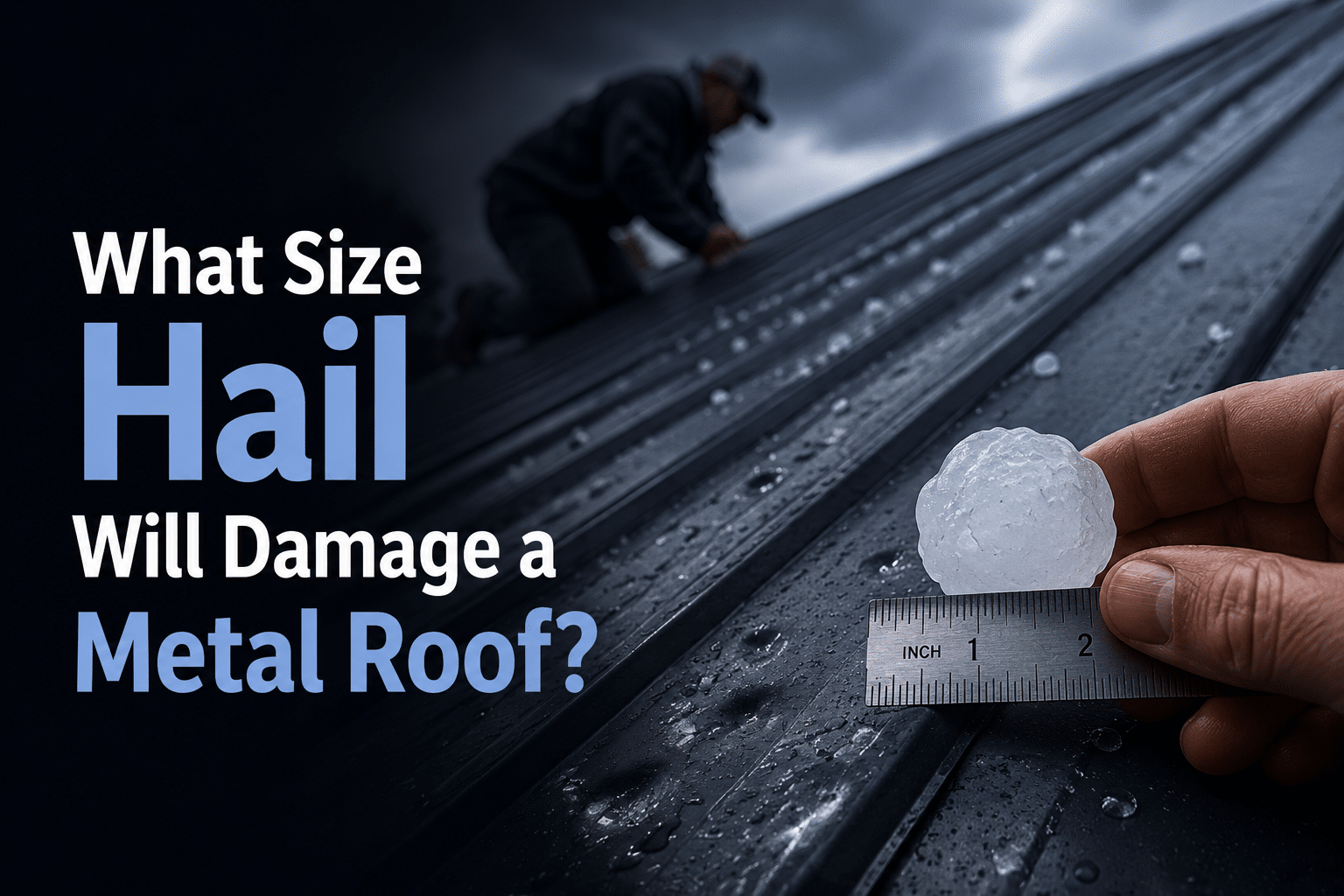
A metal roof can look tough enough to handle almost anything, but hail is different. One storm can leave small dents, chipped coating, damaged seams, or hidden weak spots that are hard to see from the ground.
If you are asking what size hail will damage a metal roof, the answer depends on more than the hailstone size alone. Metal type, roof age, panel thickness, wind speed, coating condition, and impact angle all affect how much damage the roof takes.
What Size Hail Will Damage a Metal Roof? Quick Answer
What size hail will damage a metal roof? Hail around 1 inch can dent some metal roofs, especially softer or thinner panels. Hail around 1.5 inches or larger is more likely to leave visible dents, coating damage, or impact marks. Hail around 2 inches or larger has a higher chance of causing serious damage, especially if strong wind drives it into the roof.
As we often explain to homeowners, metal roof hail damage is not always about size alone. A small hailstone with strong wind can cause more trouble than expected, while a stronger metal roofing system may handle larger hail with only cosmetic marks. A proper inspection is the best way to confirm whether the damage is only visual or affects roof performance.
How Hail Size Affects a Metal Roof
Hail damage usually becomes more likely as hailstones get larger, but there is no perfect size where every metal roof fails. A newer standing seam metal roof may respond differently than an older exposed-fastener metal roof or a thinner panel system.
The main concern is not only dents. Hail can also damage paint finish, protective coating, seams, flashing, fasteners, and roof penetrations. Those details matter because they affect how the roof sheds water and resists long-term corrosion.
Small hail under 1 inch
Small hail can still make noise and leave marks, but it usually causes less serious damage to most metal roofs. That said, older roofs, thin panels, or weak coating may still show small dents or surface wear.
If the roof already has rust, loose fasteners, or past storm damage, even smaller hail can make existing problems worse.
Hail around 1 inch
Hail near 1 inch, about the size of a quarter, can dent some metal roofs. This is where homeowners may start to see scattered impact marks, especially on softer metals or thinner panels.
A roof may still function after this type of damage, but it should still be checked if the storm was strong, wind-driven, or followed by heavy rain.
Hail around 1.5 inches
Hail around 1.5 inches, close to ping-pong ball size, is more likely to cause visible dents and coating damage. If the impact chips the protective finish, the roof may become more vulnerable to rust or long-term wear.
This is especially important in Florida, where heat, humidity, and repeated rain can make coating damage more serious over time.
Hail 2 inches or larger
Hail around 2 inches or larger can cause more serious damage. At this size, impact can dent panels deeply, stress seams, damage flashing, loosen fasteners, or affect nearby gutters and vents.
If hail this large hits your home, schedule a roof inspection even if you do not see an active leak right away.
Hail Size Damage Guide for Metal Roofs
Here is a practical way to understand risk levels:
| Hail Size | Common Description | Possible Metal Roof Impact |
| Under 1 inch | Pea to marble size | Usually minor, but may mark older or weaker roofs |
| Around 1 inch | Quarter size | Can dent thinner panels or softer metal |
| Around 1.5 inches | Ping-pong ball size | More likely to dent panels and damage coating |
| Around 2 inches | Golf ball size | Higher risk of functional damage, seam stress, or flashing damage |
| Over 2 inches | Larger severe hail | Can cause widespread damage and stronger insurance concerns |
Takeaway:
The bigger the hail, the higher the risk, but roof condition and installation quality matter just as much as size.
Why Metal Roofs Handle Hail Differently
Metal roofs are often stronger against hail than many other roofing materials, but they are not damage-proof. Their performance depends on the specific system.
A thick, high-quality metal panel with strong coating and proper installation may handle hail better than a thin, older panel with loose fasteners or worn finish.
Metal type and thickness matter
Steel, aluminum, and other metal types react differently to impact. Thicker panels usually resist denting better. Softer metals may show dents more easily.
That is why two homes in the same storm can have very different results.
Roof design also matters
Standing seam metal roofing often performs differently than exposed-fastener systems. Seams, fasteners, ridges, valleys, and flashing areas can all become weak points after hail impact.
If you already have a metal roof and notice damage, a page like metal roof repair can help you understand when repair may be needed.
Cosmetic Damage vs Functional Damage
This is one of the most important distinctions after hail hits a metal roof.
Some dents only affect appearance. Other impacts affect how the roof performs. Insurance companies often look closely at this difference, especially with metal roofs.
Cosmetic hail damage
Cosmetic damage usually means the roof still works, but it looks dented or marked. This may include shallow dents, surface dimples, or visible impact marks without leaks or system failure.
Some homeowners still care about cosmetic damage because it affects curb appeal and resale value. However, insurance policies may handle cosmetic metal roof damage differently.
Functional hail damage
Functional damage affects performance. This can include:
- punctured panels
- cracked or chipped coating
- seam separation
- loose fasteners
- damaged flashing
- leaks after the storm
- corrosion risk from exposed metal
Functional damage needs attention because it can lead to water intrusion, rust, and bigger repairs later.
Signs Hail Damaged Your Metal Roof
You do not need to climb onto the roof to look for early signs. Many clues can show up around the property.
Ground-level signs to check
Look for:
- dented gutters or downspouts
- damaged roof vents
- dents on metal awnings or AC units
- chipped paint on metal surfaces
- broken screens or damaged siding
- water stains after the storm
These signs do not prove roof damage by themselves, but they suggest the hail was strong enough to justify an inspection.
Roof-level signs a professional may check
A roofer may look for dent patterns, coating cracks, seam stress, fastener damage, flashing problems, and areas where hail impact affected roof performance.
If the storm also brought wind and heavy rain, review what to do after hail, wind, or rain damage so you know the next steps.
Can Hail Damage Cause a Metal Roof to Leak?
Yes, but not every dent leads to a leak. A metal roof can have visible dents and still keep water out. The risk increases when hail damages seams, flashing, fasteners, penetrations, or coating.
Leaks may show up right away, or they may appear later after repeated rain. That delay is one reason homeowners should not wait too long after a severe storm.
Why leaks may not appear immediately
Some hail damage weakens the system without opening a clear hole right away. Water may enter later when another storm hits, sealant fails, or damaged coating starts to corrode.
This is why a dry ceiling does not always mean the roof is fine.
When to treat it as urgent
Call a roofer quickly if you notice:
- water stains inside
- new ceiling spots
- active dripping
- damaged flashing
- large dents near seams
- loose or lifted panels
In those cases, the issue may need more than a basic visual check.
Will Insurance Cover Hail Damage to a Metal Roof?
Insurance may cover hail damage if the damage is caused by a covered event and affects the roof in a way the policy recognizes. But the answer depends on your policy.
Many insurance disputes around metal roofs come down to cosmetic versus functional damage. Dents may be denied if the policy excludes cosmetic metal damage. Damage that affects water protection or roof performance has a stronger case.
If insurance is part of your concern, this guide on roof inspection after a hailstorm is a useful supporting resource.
Should You Repair or Replace a Hail-Damaged Metal Roof?
The answer depends on damage severity, roof age, panel condition, and whether the damage is isolated or widespread.
A few minor dents may not justify replacement. Widespread damage, seam failure, punctures, coating loss, or repeated leaks may make replacement more realistic.
Repair may make sense when
- damage is limited to one area
- no active leaks are present
- panels are still structurally sound
- flashing or fasteners need targeted repair
Replacement may make sense when
- dents are widespread
- coating damage is severe
- multiple seams or panels are affected
- the roof is already near the end of its useful life
- matching panels are not practical
If you are weighing the decision, need roof repair or roof replacement can help you think through the next step.
How Florida Weather Changes the Risk
Orlando roofs deal with more than one storm factor at a time. Hail often comes with wind, heavy rain, and sudden weather changes. That combination can increase roof stress.
Florida humidity and heat can also make coating damage more important. If hail chips or cracks the protective finish, moisture exposure may create long-term problems faster than homeowners expect.
Why fast inspection matters in Florida
After a hailstorm, quick documentation helps protect your options. It gives you a clearer record of damage, helps with insurance conversations, and lets you fix vulnerable areas before the next storm.
Florida roofs face repeated weather pressure, so small weak spots rarely improve on their own.
FAQ Section
What size hail damages a metal roof?
Hail around 1 inch can dent some metal roofs. Hail around 1.5 to 2 inches or larger is more likely to cause visible or functional damage.
Can pea-size hail damage a metal roof?
Usually not seriously, but it may mark older, softer, or already weakened metal roofing systems.
Can quarter-size hail dent a metal roof?
Yes, quarter-size hail can dent thinner panels or softer metal, especially when wind drives it into the roof.
Does golf ball-size hail damage metal roofs?
Yes, golf ball-size hail can cause significant dents, coating damage, seam stress, and possible functional damage.
Is metal roofing hail-proof?
No. Metal roofs are durable and often perform well in hail, but they are not completely hail-proof.
Can hail dents cause leaks in a metal roof?
Dents alone may not cause leaks, but damage to seams, fasteners, flashing, coating, or panels can lead to water intrusion.
Will insurance pay for hail dents on a metal roof?
It depends on your policy and whether the damage is considered cosmetic or functional. Some policies exclude cosmetic damage.
Should I inspect my metal roof after hail if there is no leak?
Yes, especially if the hail was large, wind-driven, or damaged gutters, vents, screens, or other metal surfaces around the home.
Not Sure If Hail Damaged Your Metal Roof?
If hail hit your home and you are unsure whether the damage is cosmetic or serious, Rhino Roofing Orlando can help. We can inspect your metal roof, explain what we find, and help you understand whether repair, replacement, or insurance documentation may be needed. Schedule a roof inspection or contact Rhino Roofing Orlando for clear next steps.
Conclusion
What size hail will damage a metal roof? Hail around 1 inch can dent some metal roofs, while hail around 1.5 to 2 inches or larger is more likely to cause coating damage, deeper dents, seam issues, or functional roof problems.
Still, size is only part of the story. Wind speed, roof age, metal type, panel thickness, coating condition, and installation quality all matter. If your roof was hit by hail, the safest move is to have it inspected before small damage turns into a bigger issue.